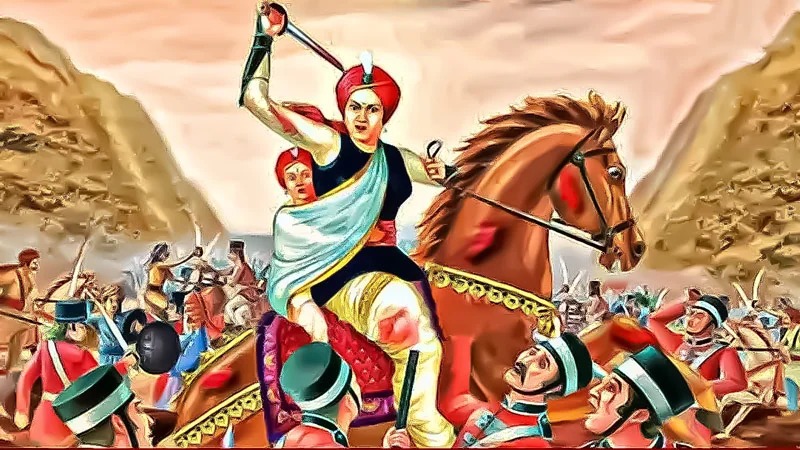

Fearless on horseback, she fought, a queen whose courage lit India’s freedom path.
Beneath the dawn of a restless India, where dreams of freedom flickered in the hearts of many, rose Rani Lakshmibai, the Queen of Jhansi, a beacon of courage and determination. Born as Manikarnika in Varanasi, she was destined to become more than a queen, she became a symbol of bravery, resilience, and unyielding spirit. From her early years, she showed intelligence and courage that would later define her as one of India’s greatest warriors.
Married to Raja Gangadhar Rao, Lakshmibai embraced her role as the queen of Jhansi with grace and dedication. But when her kingdom faced threats and injustice, she took up arms, mounted her horse, and led her troops into battle with unmatched valor. Her life was a blend of love, leadership, and legendary bravery, and the untold stories of her struggles, sacrifices, and victories continue to inspire generations. Rani Lakshmibai remains not just a queen, but an eternal symbol of India’s fight for freedom.
Early Life and Childhood Of Rani Lakshmibai
From the holy city of Varanasi grew a flame that would later blaze across battlefields and history. Rani Lakshmibai, born Manikarnika in 1828, entered a world where tradition often limited women’s roles. Yet, from an early age, she displayed remarkable courage and curiosity, hinting at the extraordinary life she was destined to lead.
She was born into a Marathi Brahmin family where her father, Moropant Tambe, encouraged her to learn riding, archery, and swordplay, skills rarely taught to girls at that time. These lessons were more than just physical training, they instilled confidence, discipline, and an unshakable spirit that would later define her as a warrior queen. Manikarnika’s childhood was also marked by intelligence and boldness. Fearless in her play and eager to explore the world, she often amazed elders with her quick thinking and decisiveness. These formative years nurtured the qualities of leadership, courage, and resilience that would help her face the challenges of life as the Queen of Jhansi.
Marriage and Role as Queen
When she married Raja Gangadhar Rao of Jhansi, Manikarnika became Lakshmibai, the queen of an important princely state in northern India. Her marriage was more than a union of two individuals, it was a partnership rooted in respect and shared responsibility. As queen, Lakshmibai took part in state council meetings and became familiar with administrative duties. Jhansi, under her guidance, began to reflect her spirit: dignified, orderly, and fiercely independent. She cared deeply for her people, often visiting villages and learning about their challenges. The bond between Lakshmibai and her kingdom was deep, and her role as queen was not ceremonial, she was a leader in thought and action.
Challenges and Struggles
This phase of Rani Lakshmibai’s life was pivotal, setting the stage for her transformation into an iconic Indian freedom fighter. Her story is not just one of personal loss but of courage against injustice and colonial oppression.
When Raja Gangadhar Rao passed away in 1853, he left no biological heir. In an effort to secure the future of Jhansi, Lakshmibai adopted a son, Dhan Lakshman, treating him with love and care as both mother and queen. However, the British East India Company, under the controversial Doctrine of Lapse, refused to recognize the adopted heir and demanded that Jhansi be annexed. This policy allowed the British to take control of any princely state lacking a natural successor, disregarding local traditions and rights.
The annexation order was not merely a political maneuver, it was a profound insult to Lakshmibai’s authority and the pride of her kingdom. It threatened the very heart of Jhansi, leaving its people uncertain and fearful for their future. Demonstrating remarkable composure and determination, Lakshmibai submitted petitions to the British, arguing for justice and the legitimate claim of her adopted son. Her appeals were respectful, yet firm, reflecting both her intelligence and unwavering sense of duty.
Realizing that diplomacy alone would not protect her kingdom, Lakshmibai began preparing for resistance. She trained herself in strategy and combat, rallied her allies, and inspired the people of Jhansi to stand united. The struggle for her kingdom became more than a personal fight, it ignited a spark of rebellion that would soon intertwine with the larger 1857 revolt, marking her as a symbol of resistance against colonial rule and an enduring icon of courage in Indian history.
Military Leadership and Battles
The military phase of Rani Lakshmibai’s life marked her transformation from a determined queen into a legendary warrior of India. As tensions with the British escalated, she took full control of Jhansi’s defenses, understanding that the survival of her kingdom depended on preparation and strategy. She personally trained with her soldiers, studied battlefield tactics, and devised defensive plans. Her leadership was hands-on, she led drills, inspected fortifications, and motivated her troops with speeches that inspired courage and loyalty.
In 1857, when the Sepoy Mutiny erupted and spread across northern India, Jhansi became a crucial center of resistance. The British expected her to surrender, but Lakshmibai refused. She led her army with unmatched bravery, defending the fort and the streets of Jhansi. From the fierce defense of her city to the strategic clash at Kotah-ki-Serai, she displayed tactical genius despite being outnumbered. Each move she made reflected a mind sharpened for battle and a heart devoted to her people.
Accounts from the battlefield describe her riding into combat with her son strapped to her back, sword in hand, eyes fixed on victory. She personally led cavalry charges, broke enemy lines, and instilled fear in British forces. Even after Jhansi fell, she regrouped with other rebel leaders and led a bold assault to capture Gwalior Fort, turning every engagement into a symbol of defiance and determination. Despite overwhelming odds, her courage inspired her soldiers and the people, making her a true icon of resistance.
Lakshmibai’s final battles were a mixture of heroism and tragedy. Even as defeat approached, she fought with dignity, refusing to surrender her honor or her cause. She fell in combat at Gwalior in 1858, but her legacy transcended her death. Songs, poems, and folklore immortalized her bravery, and she remains an enduring symbol of courage, leadership, and unwavering commitment to India’s freedom. Her life on the battlefield continues to inspire generations to stand for justice and sovereignty.
Personal Qualities
Beyond battles and politics, Rani Lakshmibai’s personal qualities made her unforgettable. She balanced the strength of a warrior with the warmth of a mother and the wisdom of a leader. Her ability to connect with people, soldiers, villagers, and advisors made her more than a queen, she became a symbol of unity and resilience. Her love for her son, Dhan Lakshman, was deep and genuine. She carried him with her to the battlefield, showing that strength and tenderness could coexist. These qualities allowed her to inspire loyalty among her troops and affection among her people.
Many stories about Lakshmibai go beyond textbooks. It is said that during moments of peace, she enjoyed music and poetry, using art to soothe her spirit amidst turmoil. Other lesser‑known tales describe how she personally tended to wounded soldiers, listening to their stories and lifting their spirits with her poetry. Some historians suggest she used unconventional tactics learned from local tribes, blending traditional and modern strategies to outsmart larger forces. These untold stories show a leader who was not just brave, but innovative and deeply human in her approach to war and peace.
Legacy
Rani Lakshmibai’s legacy is monumental. She remains one of the most celebrated Indian freedom fighters, her story taught in schools and her image honored in art, literature, and cinema. Her life stands as a testament to courage, sacrifice, and the relentless pursuit of justice. Across India, statues and memorials commemorate her bravery. Her story has inspired generations of women and men to stand against injustice and believe in their power to change history. Lakshmibai’s legacy is not frozen in the past, it continues to shape discussions around leadership, gender equality, and national pride.
Rani Lakshmibai was more than a queen, she was a visionary leader, a fierce warrior, and a compassionate human being. Her journey from Manikarnika of Varanasi to the Queen of Jhansi reflects a life lived with unshakable resolve and purpose. Her story remains one of the most powerful chapters in India’s history of resistance, reminding us that true freedom is defended not just with weapons, but with courage, heart, and conviction.