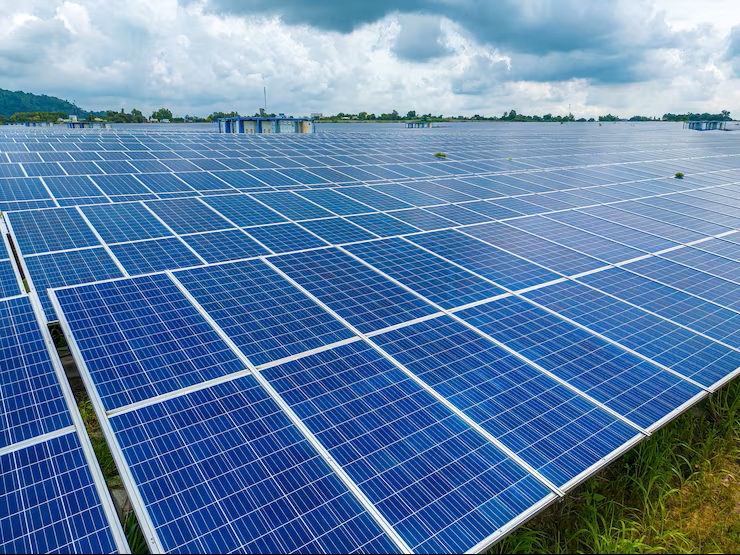

When sunlight meets human design, energy becomes opportunity.
Solar power systems bring together innovation and practical engineering, which turn the sunlight into usable electricity. Every solar panel works as part of a larger system where technology operates in sync to deliver clean and reliable energy. At the core of this process are photovoltaic cells that capture sunlight and convert it into electrical power by activating electrons. This energy then flows through inverters, mounting structures, and monitoring tools, all designed to ensure stable performance and efficient power generation.
Over time, solar power technology has evolved from a basic energy alternative into a smart and dependable solution. Modern systems are built to improve efficiency, minimize energy loss, and perform consistently under different weather conditions. Advancements in materials, electronics, and energy storage have made solar power more affordable and easier to adopt. Understanding this technology helps explain not only how solar electricity is produced, but also how it is shaping a cleaner, more resilient future for global energy.
About Solar Panels: History, Types, Global Use, and Profit
The story of solar panels begins with scientific curiosity and evolves into a global energy movement. In 1839, French physicist Alexandre Edmond Becquerel discovered the photovoltaic effect, proving that light could generate electricity. This discovery remained largely theoretical until 1954, when researchers at Bell Laboratories in the United States developed the first practical silicon solar cell. Early solar panels were expensive and inefficient, used mainly in space programs. Over the decades, advances in semiconductor technology, manufacturing processes, and materials science have transformed solar panels into a reliable and commercially viable power source.
Modern solar panels are categorized into three primary types, each designed to meet different performance and cost needs:
- Monocrystalline Solar Panels: Made from a single silicon crystal, offering high efficiency, better performance in low light, and long operational life.
- Polycrystalline Solar Panels: Manufactured from multiple silicon crystals, providing a cost-effective option with slightly lower efficiency.
- Thin-Film Solar Panels: Lightweight and flexible panels used for large-scale projects, rooftops with load limits, and specialized applications.
On a global scale, solar energy adoption has accelerated rapidly. China leads the world in solar panel installations, supported by large manufacturing capacity and national energy strategies. Countries such as the United States, India, Germany, and Japan have also invested heavily in solar infrastructure to reduce carbon emissions and strengthen energy security. Falling panel prices and government incentives continue to drive worldwide growth.
From a profit perspective, solar panels offer compelling long-term financial value. Once installed, operating costs are minimal, and electricity generation is essentially free. Households and businesses see substantial reductions in electricity bills, while surplus power can be exported to the grid through net metering in many regions. Over their 25–30 year lifespan, solar panels deliver consistent savings, stable energy costs, and strong returns on investment, making them both an environmental and economic asset.
Technology Behind Solar Power Systems
Solar panels generate electricity by capturing sunlight and converting it into usable electrical power through a chain of tightly aligned technologies. The foundation of this system is the photovoltaic (PV) cell. Each PV cell is made primarily from silicon, a semiconductor material. Silicon is treated with other elements to create a positive layer and a negative layer. This internal structure forms an electric field inside the cell.
When sunlight reaches the solar panel, it carries tiny energy packets called photons. These photons strike the silicon surface and transfer their energy to electrons. As a result, electrons break free from their atomic bonds and begin to flow in a specific direction due to the internal electric field. This controlled movement of electrons produces direct current (DC) electricity. Multiple solar cells are connected to form a module, and multiple modules form a solar panel to increase power output.
The electricity generated by solar panels is DC power, which is not suitable for most electrical devices. This is where solar inverter technology becomes essential. The inverter converts DC electricity into alternating current (AC) by rapidly switching the current’s direction. Modern inverters also optimize power output, regulate voltage, protect the system from electrical faults, and synchronize the solar power with the grid’s frequency. Types of inverters include string inverters, microinverters, and hybrid inverters, each serving different system sizes and performance needs.
To ensure power availability beyond daylight hours, many systems integrate solar energy storage. Solar batteries store enough amount of electricity generated during peak sunlight hours. Lithium-ion batteries dominate this space due to their high energy density, fast charging capability, longer life cycles, and lower maintenance requirements. A battery management system controls charging, discharging, temperature, and safety, ensuring stable and efficient energy use during nights, cloudy periods, or power outages.
Mounting structures play a critical mechanical role in system performance. Panels are mounted on rooftops or ground-based frames at specific tilt angles and orientations to maximize sunlight exposure throughout the year. These structures are engineered to withstand wind, rain, heat, and seismic forces while maintaining panel alignment.
Solar monitoring systems add intelligence to the setup. Sensors and software track energy production, consumption patterns, system efficiency, and fault conditions in real time. Users can access this data through mobile or web applications, allowing proactive maintenance and performance optimization.
In grid-connected solar systems, electricity not used on-site is exported to the utility grid through net metering technology. This allows users to earn energy credits, lowering electricity bills and improving return on investment. Grid protection devices ensure safe disconnection during power failures to protect utility workers.
Together, solar panels, inverters, batteries, mounting systems, monitoring tools, and grid integration technologies function as a unified ecosystem. Each component supports the others, transforming raw sunlight into dependable, scalable, and clean electrical power.
Environmental and Economic Impact of Solar Technology
Solar technology has a profound environmental impact. It produces electricity without burning fossil fuels, which means zero carbon emissions during operation. This helps reduce air pollution, slow climate change, and conserve natural resources. Unlike coal or gas plants, solar systems use no water for electricity generation, making them ideal for water-scarce regions.
From an economic perspective, solar power is a cost-stabilizing force. It reduces dependence on imported fuels and protects economies from fluctuating energy prices. The solar industry also creates jobs across manufacturing, installation, maintenance, and research sectors. As technology advances, solar power continues to become cheaper, making clean energy accessible to more people.
Solar systems also decentralize energy production. Homes, offices, and industries can generate their own power, reducing pressure on national grids and improving energy security. This shift reshapes energy economics from centralized control to distributed ownership.
Future of Solar Power Systems
The future of solar power systems is defined by efficiency, intelligence, and scale. New materials like perovskite solar cells promise higher efficiency at lower cost. Bifacial panels can generate power from both sides, increasing output without extra space. Artificial intelligence and smart software will optimize energy production and predict maintenance needs.
Energy storage will continue to evolve, enabling round-the-clock solar power. Solar systems will integrate seamlessly with electric vehicles, smart homes, and smart cities. Large-scale solar farms and decentralized rooftop systems will grow together, forming a balanced energy ecosystem.
In the long term, solar power will move from being an alternative energy source to becoming a primary pillar of global electricity generation. It represents a strategic shift toward resilience, sustainability, and long-term value creation for both people and the planet.