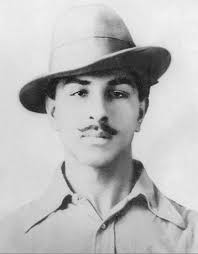

At 23, he outgrew fear; his legacy proves that thought fuels true rebellion.
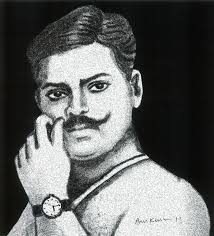
Bhagat Singh’s legacy is not just a chapter in Indian history, it is a living blueprint of courage, clarity, and conscious rebellion. He stands at the intersection of youth, ideology, and sacrifice, proving that age is not a limitation when purpose is aligned with action. In simple terms, Bhagat Singh was a young Indian freedom fighter who chose ideas over fear and truth over silence, at a time when India was under British colonial rule. His life story continues to inspire generations because it blends intellect with bravery, emotion with discipline, and patriotism with global thinking.
Bhagat Singh was born on 28 September 1907 in Banga village, which was part of the Lyallpur district of Punjab in British India (now in Pakistan). He was born into a deeply patriotic family where the idea of freedom was not just discussed but lived. His father’s name was Sardar Kishan Singh, and his mother was Vidya Vati. Both belonged to a family that was actively involved in the Indian freedom struggle. His uncles, Ajit Singh and Swaran Singh, were also revolutionaries who opposed British rule. This environment shaped Bhagat Singh from a very young age, making nationalism part of his daily thinking rather than a distant concept.
From childhood, Bhagat Singh showed sharp intelligence and curiosity. He was deeply affected by the Jallianwala Bagh massacre of 1919, where British troops killed hundreds of unarmed Indians. As a child, he reportedly visited the site and collected soil soaked with the blood of the victims, seeing it as sacred. This moment silently planted the seed of resistance in his mind. Unlike many children of his age, Bhagat Singh did not dream of personal success; he dreamed of a free India built on justice and equality.
Bhagat Singh was not only brave, he was also highly educated and intellectually driven. He studied at National College in Lahore, where he developed a deep interest in politics, literature, and revolutionary philosophy. He read extensively, including works by Karl Marx, Lenin, and other socialist thinkers. Over time, he moved beyond emotional patriotism and embraced revolutionary socialism, believing that freedom was meaningless without social and economic equality. His vision of independence was forward-thinking, strategic, and inclusive. As he grew older, Bhagat Singh became actively involved in revolutionary organizations. He then joined the Hindustan Republican Association (HRA), which later became the Hindustan Socialist Republican Association (HSRA). His goal was not blind violence but symbolic action that would awaken the masses from fear and submission. He believed that revolution meant a change in mindset, not just a change of rulers. His famous belief was that the real revolution would come when people started thinking freely.
One of the most defining actions of Bhagat Singh’s life was the assassination of British officer John Saunders in 1928. This act was meant as revenge for the death of Lala Lajpat Rai, who died after being brutally beaten by British police during a protest. Bhagat Singh and his associates planned the act carefully, seeing it as a political statement rather than personal revenge. After this, Bhagat Singh went underground but did not hide for long.
In 1929, Bhagat Singh, along with Batukeshwar Dutt, threw non-lethal bombs inside the Central Legislative Assembly in Delhi. The bombs were intentionally weak and designed not to kill anyone. Their real weapon was the slogan they shouted: “Inquilab Zindabad” (Long Live the Revolution). They willingly courted arrest to use the courtroom as a platform to spread their ideas. This strategic move turned Bhagat Singh into a national symbol overnight. During his time in jail, Bhagat Singh continued to lead with intellect. He went on long hunger strikes demanding equal rights for Indian prisoners, proving that resistance could be peaceful yet powerful. He wrote essays, letters, and articles explaining his philosophy. One of his most famous writings, “Why I Am an Atheist,” shows his rational thinking, honesty, and moral courage. He believed deeply in logic, human dignity, and accountability.
On 23 March 1931, at the young age of 23, Bhagat Singh was executed by the British government along with Rajguru and Sukhdev. His execution shook the nation. Instead of fear, it ignited fire in the hearts of millions. People who had never spoken against British rule began questioning authority. His martyrdom accelerated the freedom movement and reshaped how Indians viewed sacrifice and resistance. Bhagat Singh’s legacy today is far greater than statues or slogans. He represents fearless thinking, ethical rebellion, and youthful leadership. He was not against life; he was against injustice. He did not glorify violence; he glorified awakening. In modern terms, Bhagat Singh was a visionary disruptor, a thought leader ahead of his time, and a catalyst for systemic change. His life teaches us that real patriotism is not loud, but lasting—and that ideas, when backed by courage, can outlive empires.
One of the most important aspects of Bhagat Singh’s life was his clarity of thought. Unlike many revolutionaries who acted only on emotion, he believed that freedom must be rooted in reason, awareness, and responsibility. He openly challenged blind faith, superstition, and fear, both of the British and within Indian society itself. His decision to declare himself an atheist was not a rebellion for attention; it was an act of intellectual honesty. Bhagat Singh also believed that political freedom without social justice was incomplete. He was deeply concerned about poverty, exploitation of workers, and inequality. He imagined an India where farmers, laborers, and common people lived with dignity, not just one where power changed hands. This is why he leaned toward socialism, not as an imported idea, but as a practical framework for fairness. In today’s language, he was thinking about systems, not symbols; outcomes, not optics.
In closing, Bhagat Singh was not just a freedom fighter, he was a philosopher in action, a strategist with a soul, and a young leader who understood that revolutions begin in the mind before they reach the streets. His life tells us that age does not define impact, silence is never neutral, and ideas, when lived honestly, can outlast empires.