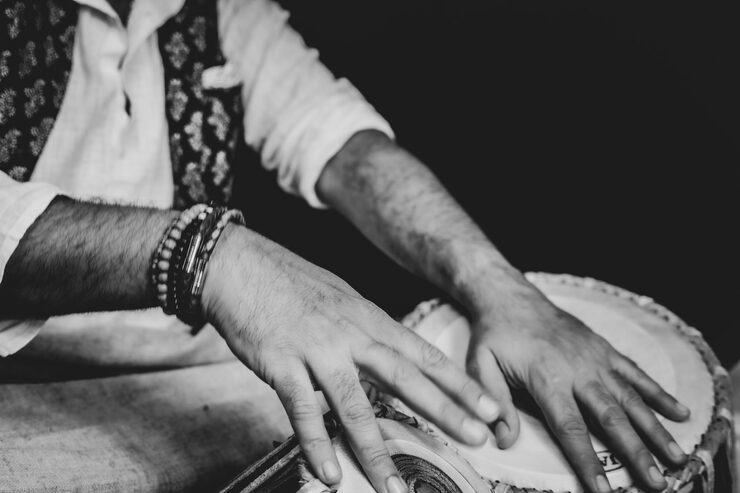

Simple songs, deep roots, telling human stories across passing time.
Traditional folk music operates as a living archive, quietly aligning culture, memory, and identity into a single, resonant framework. Across regions, it functions as an oral communication strategy, transmitting stories long before formal literacy scaled. Through rhythm, repetition, and locally rooted language, folk songs document everyday life, harvests, migrations, conflicts, love, loss, and turn collective experience into shared narrative capital. The music is not ornamental, it is operational. Each melody becomes a delivery system for history, values, and social norms, optimized for recall and emotional engagement.
In many communities, storytelling through folk music bridges generations, ensuring continuity without reliance on written records. Elders become custodians, performers become narrators, and audiences become participants in an ongoing cultural feedback loop. Importantly, regional folk music adapts without losing core intent. As contexts shift, and lyrics evolve, but the storytelling mandate remains intact, allowing tradition to stay relevant rather than static. From ballads and work songs to ritual chants, folk music humanizes history, offering perspective rather than chronology. It captures not just what happened, but how it felt. In a modern landscape driven by speed and scalability, traditional folk music reminds us of slower, deeper forms of knowledge transfer, where stories are not consumed, but absorbed. Its role in regional storytelling is therefore strategic, resilient, and quietly transformative, anchoring identity while allowing culture to move forward with integrity.
Origin of Folk Music
The origin of folk music can be traced back to the earliest human communities, where survival and social bonding were closely connected. As people began to live in groups, music emerged naturally as a shared language. In agricultural societies, songs helped coordinate work in the fields, set the rhythm for collective labor, and ease physical exhaustion. Traders and travelers carried melodies from one region to another, allowing musical ideas to blend while still retaining local character. Rituals related to birth, marriage, harvest, and death also gave rise to songs that explained life’s transitions, embedding storytelling into everyday experience. Music, in this phase, was not entertainment in the modern sense but a practical and emotional tool woven into daily life.
Over time, folk music became a cultural memory system. Since most early societies relied on oral traditions, songs acted as living records of history, social rules, and moral lessons. Lullabies taught children values and identity, while ballads preserved stories of ancestors, heroes, and important events. These songs were passed down verbally, changing slightly with each generation but keeping their core meaning intact. As regions developed distinct languages, occupations, and belief systems, their music also evolved uniquely. In this way, folk music grew into a strong symbol of regional identity, reflecting how people lived, believed, and understood their world.
Types of Folk Music
Folk music takes many forms, shaped by the daily lives, emotions, and social structures of the communities that create it. One of the most prominent types is narrative folk music, often expressed through ballads and long-form songs. These songs tell detailed stories of love, sacrifice, heroism, migration, conflict, or tragedy. They function as oral history, preserving events and personal experiences that may never appear in written records. Through simple melodies and repeated verses, narrative songs ensure that stories are remembered, shared, and emotionally understood across generations.
Another important category is work songs, which are closely tied to labor and livelihood. These include farming songs, fishing chants, shepherd melodies, and construction rhythms. Such songs help set a steady pace for physical work and reduce fatigue, while also creating a sense of unity among workers. Often, work songs reflect social realities, hardship, hope, resistance, or humor, turning routine labor into a shared storytelling experience. Alongside these are lullabies, sung within families, which gently pass on cultural values, moral lessons, and emotional security to children.
Ritual, devotional, and festival folk songs form another major group. Ritual and devotional songs are connected to religious beliefs, prayers, and spiritual storytelling, often praising deities, saints, or natural forces. Festival songs, on the other hand, celebrate seasonal changes, harvest cycles, marriages, and communal gatherings. These songs strengthen social bonds and reinforce cultural identity. Together, all types of folk music blend storytelling with everyday life, ensuring that culture is lived, sung, and remembered rather than simply recorded.
Folk Music and Religion
Religion has played a central role in shaping folk music, giving it spiritual depth and emotional meaning. In many traditions, folk songs developed as a way for ordinary people to express faith in their own language and musical style. Unlike formal religious music performed in temples or churches, folk religious songs are simple, accessible, and closely connected to daily life. They are sung during festivals, pilgrimages, household rituals, and seasonal ceremonies, allowing spiritual storytelling to become part of community life rather than a distant practice.
In Hindu traditions, folk music often centers on local gods, goddesses, and mythological stories. Songs are performed during festivals such as harvest celebrations, Navratri, or village fairs, narrating stories from epics and regional legends. Bhajans, kirtans, and regional devotional songs blend moral teachings with emotional storytelling, making philosophy understandable to common people. Similarly, Islamic folk traditions, especially Sufi music, use poetic lyrics and repetitive melodies to express devotion, divine love, and the search for inner truth. These songs often tell symbolic stories that guide listeners toward spiritual reflection rather than strict doctrine.
Christian folk music developed as hymns and spiritual songs sung in local languages, narrating biblical events and moral lessons in a familiar cultural style. Indigenous and tribal religions rely heavily on chants, drum-based rhythms, and communal singing to tell stories of creation, ancestors, and nature spirits. In these traditions, music is inseparable from belief. Across religions, folk music serves as a bridge between sacred teachings and everyday experience, making faith personal, emotional, and deeply rooted in cultural identity.
Who Composed Folk Music
Unlike classical or modern music, folk music rarely has a known composer. Songs were created collectively and refined over generations. A farmer, shepherd, or village elder might compose a verse, which others would modify over time. This shared ownership allowed folk music to evolve while staying authentic. The community itself became the composer, editor, and performer.
Timeline and Evolution
Folk music cannot be placed within a fixed historical timeline because it evolved organically alongside human society. Many folk songs originated centuries ago, shaped by oral traditions rather than written notation. As a result, exact dates and original versions are often unknown. These songs survived through constant repetition, passed from one generation to the next by memory and performance. Over time, lyrics, melodies, and rhythms changed subtly to reflect new social realities, local events, and cultural influences, while the core story or message remained intact.
As societies experienced political change, migration, and technological progress, folk music adapted without losing its identity. Colonial rule, social reform movements, and modernization all left traces in folk songs, adding new themes of resistance, hope, and transformation. In the modern era, folk music continues to evolve by interacting with classical, popular, and digital music forms. Yet, despite these influences, its narrative essence endures. Folk music remains a living tradition, flexible enough to change, yet strong enough to preserve collective memory and cultural continuity across time