
The Complete At-Home Fitness Plan: Build Strength, Burn Fat, and Feel Unstoppable
Look, real strength doesn’t start in a gym. It starts the day you stop making excuses and actually show up for yourself, on your own living room floor if that’s what you’ve got. Your body’s the one tool you carry into everything else you do, and if you never sharpen it, life just feels heavier than it needs to. This isn’t about how you look in a mirror. It’s about energy, about handling whatever the day throws at you, about the kind of confidence that shows up before you even say a word.
Here’s how I’d structure a full home routine, no gym, barely any equipment: intervals for fat loss, bodyweight work for strength, some core training, cardio, yoga, and the daily habits that make all of it actually show up in how you carry yourself.
HIIT: The Fastest Way to Burn Fat at Home
The idea behind interval training is stupidly simple. Go hard for a short burst, rest a little, go again. Forty seconds of burpees, twenty seconds of rest, straight into squats or jumping jacks. That’s basically the whole system, and somehow it works better than most complicated programs I’ve seen.
What people don’t realize about HIIT is that the real payoff happens after you’ve stopped moving. Your metabolism stays cranked up for hours, so you’re burning more just sitting around later that evening. And because a real session only takes 15-20 minutes, it actually fits into a life that doesn’t have two free hours a day for the gym.
Start small. Three or four sessions a week, 15 to 20 minutes each. Pick four or five moves, burpees, squats, push-ups, mountain climbers, jump lunges, whatever you’ve got room for, and cycle through: 30-40 seconds hard, 15-20 seconds resting, for 4-6 rounds. Don’t skip the warm-up, give it a solid 5-10 minutes first. And when you’re in a round, actually go. Half-effort HIIT barely does anything.
Bodyweight Strength Training
Here’s the thing nobody tells beginners: you don’t need a single piece of equipment to get genuinely strong. Squats, lunges, push-ups, planks, that’s it, that’s most of what you need. A push-up alone hits your chest, shoulders, arms, and core at the same time. A squat fires up your whole lower body in one move.
I like this style of training because it carries over into real life almost immediately, carrying groceries gets easier, stairs stop feeling like a chore, picking your kid up off the floor doesn’t wreck your back. And it grows with you. Start with the basics, and once those get easy (they will), jump squats or decline push-ups will keep you humbled for a long while.
Three sets, 10-15 reps, slow and controlled, not fast and sloppy. Forty-five to sixty seconds rest between sets. If you want more resistance, a filled water bottle or a backpack with books works fine, you don’t need dumbbells. Write your reps down somewhere. Watching the number creep up week to week is honestly one of the better motivators I know.
Core Training That Actually Matters
A strong core has almost nothing to do with visible abs. It’s the thing holding your balance and stability together underneath everything else. Planks, bicycle crunches, mountain climbers, leg raises, that’s plenty to build real strength here, no equipment required.
Every other exercise you do gets better once your core is solid. Push-ups, squats, even hauling a heavy bag off the floor, all of it puts less strain on your spine when your core is actually doing its job instead of your lower back compensating for it. There’s a confidence thing here too, not gonna lie. Moving with a stable core just feels different.
Start with 20-30 second planks and build from there. Mix static holds with dynamic stuff like crunches or climbers. Keep your stomach engaged the whole time, and don’t strain your neck, breathe through it instead of holding your breath like most people do without noticing. Ten to fifteen minutes at the end of a session is enough.
Cardio That Doesn’t Require a Treadmill
Jumping jacks, skipping rope, jogging in place, dancing around your living room if that’s more your speed, none of it needs equipment. Just consistency, really. Cardio gets your heart rate up, builds endurance, and it’s one of the fastest ways I know to shake off a genuinely bad mood, thanks to the endorphin hit.
Twenty to thirty minutes, three to five times a week. Skipping rope is underrated, it burns a lot and builds coordination at the same time. If space is tight, step touches or fast walking in place still work. Rough guide for intensity: your pulse should sit around 60-70% of max heart rate during the session, and no, you don’t need a fancy watch, just check your pulse for 15 seconds and do the math.
Yoga and Flexibility Work
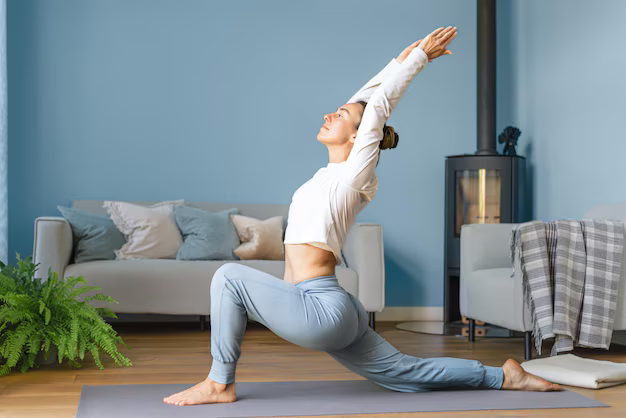
Yoga looks gentle sitting next to a HIIT circuit, but don’t sleep on it. Downward dog, warrior pose, boat pose, these demand real strength and focus, not just flexibility like people assume. Two or three sessions a week, even 20 minutes at a time, and you’ll notice a real difference in mobility within a few weeks.
Focus on poses that open the hips and hamstrings and engage the core. Throw in some basic breathing work if you’re up for it, it helps more than people expect, both for calming down and for lung capacity during harder workouts. I use yoga mostly as recovery between the harder HIIT or strength days, not as a replacement for them.
Where Real Confidence Actually Comes From
Fitness changes more than your body, and this part gets glossed over a lot. It changes how you carry yourself in rooms that have nothing to do with exercise. Consistent training improves posture, raises your baseline energy, and shifts your mindset in ways that show up in totally ordinary moments.
A few things worth practicing on purpose: stand tall, shoulders back, instead of slouching through your day. Walk like you mean it, steady steps, not a rushed shuffle. Hold eye contact when someone’s talking to you. Speak at a normal pace, don’t rush your words, a small pause actually makes you sound more sure of yourself than filling every silence does. Keep your arms uncrossed, movements relaxed but not sloppy.
None of that is separate from the physical training, by the way. The same discipline that gets you through a workout you didn’t feel like doing is the same discipline that lets you trust yourself in a job interview or a room full of people you don’t know.
Eating for Fat Loss, Strength, and Energy
You can train hard all week and still undo most of it with bad food, so nutrition deserves real attention here, not an afterthought.
Build meals around lean proteins, eggs, chicken, fish, lentils, yogurt, since these keep you full and actually build muscle. Whole grains like oats, quinoa, brown rice give you steady energy instead of a sugar spike and crash. Healthy fats from avocados, nuts, seeds, and olive oil help balance hormones and keep you satisfied between meals so you’re not raiding the fridge at 9pm. Load up on fruit and vegetables for fiber and vitamins, processed food just can’t replicate that. Dairy or a plant alternative for bone and muscle support. And drink enough water, plain, with lemon, whatever gets you there, plus the occasional green tea if you like it.
Turmeric, ginger, garlic, cinnamon, work them into meals when you can. Not magic, nothing is, but they genuinely help with digestion and inflammation, and that matters more once you’re training regularly and your body’s recovering more often.
Bringing It All Together
The routines that actually work long-term combine all of this: HIIT for fat loss, bodyweight strength for muscle, core work for stability, cardio for endurance, yoga for recovery, and food that actually fuels the effort instead of fighting it. None of these pieces do as much alone as they do stacked together.
Stay consistent and it compounds, slowly at first, then in ways you notice all at once. Not just a leaner, stronger body. The quieter thing too, the kind of confidence that shows up in how you stand, how you talk, and how you handle whatever the day decides to throw at you.