
Technology gives us wings to fly, but sometimes forgets to teach us how to land.
Try this. Put your phone in another room for one hour. Just one. Notice how many times your hand still reaches for your pocket anyway. That little twitch, that automatic reach for something that isn’t there, tells you everything about where we are right now. Technology didn’t just enter our lives. It moved in, rearranged the furniture, and never really left.
And the strange part is, most of us can’t even remember exactly when it happened. One day we were looking things up in encyclopedias, and the next, an entire library sits quietly in our pockets, ignored more often than it’s used. We didn’t choose this shift so much as we drifted into it. So maybe it’s worth actually stopping to ask: what has this given us, and what has it quietly taken away?
Instant Communication
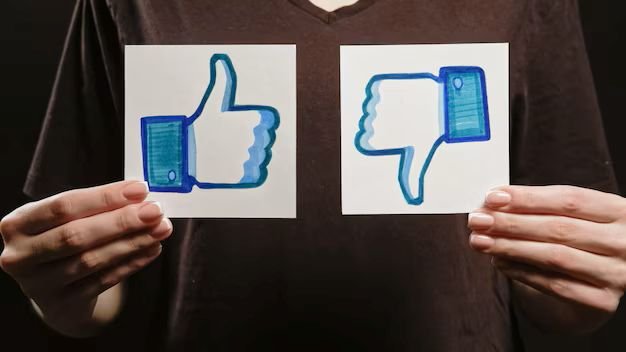
There was a time when “I miss you” took a week to arrive. Written on paper, sealed in an envelope, carried across cities by hand. Now it takes half a second and a thumbs-up emoji. Say what you want about that, but it means a mother in Mumbai can watch her son blow out candles in Toronto, live, in real time, like she never left the room.
This kind of closeness used to be a luxury only the wealthy could afford, international calls, telegrams, letters that cost a small fortune to send. Now it’s free, instant, and available to almost anyone with a phone. Friendships survive distances that used to quietly kill them. Emergencies get handled faster because help is one tap away instead of a long walk to the nearest phone booth.
But somewhere along the way, we also became impatient in a way our grandparents never were. Two blue ticks and no reply for an hour, and suddenly we’re spiraling, wondering what went wrong. We gained speed and lost a little patience in the trade. That’s just how it goes, I suppose, nothing comes free, not even convenience.
- Real-time video calls across any distance
- Teams collaborating from different cities without ever meeting
- Old friendships staying alive instead of fading out
- Emergency help reachable within seconds
Access to Information
Here’s a memory a lot of us share: standing in a library, flipping through pages, trying to find one fact for a school project, and giving up half the time because the book was checked out or the page was missing. That entire struggle has basically vanished. Now the answer arrives before you’ve even finished typing the question.
What’s easy to miss is how much this has quietly leveled the playing field. A kid in a small town with no access to great schools can now learn calculus, coding, or a new language from the same free resources used by students in the world’s top universities. That’s not a small thing. That’s a door that used to be locked for millions of people, swinging wide open.
Except now everyone’s shouting through that open door at once, and not all of it is true. Half-facts, twisted headlines, confident nonsense, it all looks the same on a screen. People believe the first thing they read because reading further feels like effort, and effort is exactly what the internet trained us to avoid.
Still, when it’s used with a little care, this might be the single most powerful gift technology has ever handed to ordinary people.
Convenience in Daily Life
Groceries at your door. Movie tickets booked before you’ve left your couch. Bills paid in the time it takes to boil water for tea. What used to devour an entire Saturday afternoon, the queues, the traffic, the waiting, now takes minutes, sometimes seconds.
Nobody really talks about where that saved time goes, but it goes somewhere. Into an extra hour of sleep. Into a hobby someone gave up years ago. Into simply sitting still for once, without rushing to the next errand. That’s worth something, even if we rarely stop to notice it.
Automation and Productivity
Walk into any modern office or factory, and you’ll see it immediately, machines and software quietly doing what used to take entire teams of people entire days to finish. It’s not up for debate anymore whether automation makes things faster. It clearly does, and by a wide margin.
What’s more interesting, though, is what it frees people up to actually do. Fewer hours lost to mindless paperwork means more hours spent thinking, solving, creating. Some of the best ideas in modern business came from people who finally had the mental space to think, because a machine was handling the boring stuff in the background.
But let’s not dress this up as painless progress. Real people have lost real jobs to this shift, and no amount of “it’s just how technology works” makes that easier for someone staring at an unexpected pink slip. Progress rarely arrives without a cost, and this is one of its quieter, harder ones.
- Repetitive work finished in a fraction of the usual time
- Noticeably fewer errors in industrial and office tasks
- More space for creative and strategic thinking
- Constant pressure to reskill just to stay employable
Health Risks from Overuse
Ask anyone who’s spent a decade behind a screen how their eyes feel by evening, or their neck, or their lower back. Long hours of scrolling and typing have quietly become one of the most common sources of everyday discomfort. And the worst part is how normal it’s become to stay up till 1 a.m. scrolling, then wonder the next morning why we feel so drained.
Impact on Mental Health
Social media has this sneaky habit of making people compare their actual, messy lives to someone else’s carefully chosen highlight reel. Nobody posts their bad days, their arguments, their quiet Tuesday evenings alone. So we end up comparing our behind-the-scenes to everyone else’s greatest hits, and it wears people down slowly, without them even noticing at first.
That said, it’s not all one-sided. A lot of people also find real comfort online, support groups, mental health communities, spaces where they can say things they can’t say out loud anywhere else. The tool isn’t the problem. It’s really about how, and how much, we choose to use it.
Privacy and Security Concerns
Every photo uploaded, every app permission accepted without reading, every little detail shared online adds up to something bigger than most people realize. We hand over pieces of our lives constantly, often without a second thought, and most of it sits on servers that aren’t nearly as secure as we assume.
Hacking, data leaks, identity theft, these have grown right alongside the very technology built to make our lives easier. There’s a strange irony in that. The tools meant to protect and connect us are the same ones criminals use to exploit the careless or unaware.
So now there’s this constant, quiet arms race, stronger passwords, two-step verification, better encryption, just to stay a step ahead of people trying to break in. It’s tiring, but at this point, it’s simply the cost of living a digital life.
- Rising cases of data leaks and hacking attempts
- Greater need for strong passwords and verification steps
- Slowly growing awareness around online fraud
- Heavier investment in cybersecurity every year
Environmental Impact
Nobody thinks about where an old phone actually goes once it’s replaced. But manufacturing devices, running enormous data centers, and dumping outdated electronics all leave a real mark on the planet. With people upgrading gadgets almost yearly now, electronic waste is turning into one of those problems we’ll eventually have to face head-on, whether we’re ready or not.
Job Displacement due to Automation
Some jobs are simply vanishing, data entry roles, certain manufacturing positions, chunks of customer service work. Not because the work stopped being needed, but because a machine now does it faster, cheaper, and without complaint. That’s a hard truth to sit with if it happens to be your job on the line.
But new roles keep emerging too, often in fields that didn’t even exist fifteen years ago. The people who keep learning, who stay a little curious, tend to land somewhere new and often better. The ones who dig in and resist the shift are usually the ones who struggle the longest.
Reduced Human Interaction
Here’s the strange part nobody saw coming: we’re more “connected” than any generation before us, and yet loneliness keeps climbing. Conversations shrink into texts. Texts shrink into emojis. And somewhere in that shrinking, something warm quietly disappears. Ever sit at a table full of friends where everyone’s staring down at their own screen instead of each other? That’s not really togetherness. It just looks like it from far away.
So where does all this leave us? Technology isn’t some villain sneaking up on humanity, and it’s definitely not the flawless fix it’s sometimes made out to be either. It’s just a tool, a remarkably powerful one, and like any tool, it becomes whatever the hand holding it decides to make of it. Used carelessly, it isolates, distracts, and quietly wears people down. Used with a little intention, it genuinely makes life richer. The difference was never really about the technology at all. It was always about us.