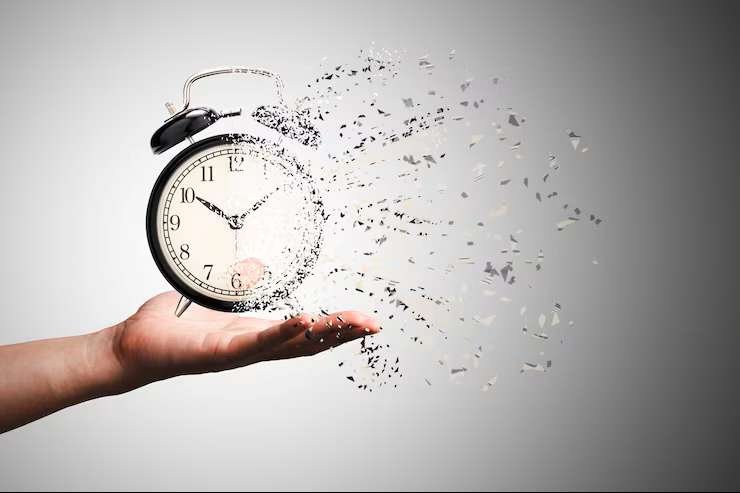

“Time quietly shapes our lives, one precious moment after another.”
Time is one of the simplest words we use every day, yet it carries a deep meaning that is far greater than we often realize. We talk about good times and bad times, morning and night, days, months, years, and even the little moments that pass almost unnoticed. We measure time in seconds, milliseconds, minutes, and hours, but can we really measure what time does to us?
Time shapes things, it shapes us, our surroundings, and nature. It changes people, places, relationships, civilizations, and even the world itself. Dinosaurs once walked across the Earth, but millions of years passed, and the world they knew disappeared. Entire ecosystems transformed, new forms of life emerged, and the planet continued moving forward without looking back. Perhaps that is the strange power of time. It never stops, never waits, and never asks whether we are ready.
There is an old thought often associated with Birbal: “Yeh waqt bhi beet jayega” this time, too, shall pass. It carries a simple truth. Happiness does not stay forever, and neither does sorrow. Time carries both away, quietly and relentlessly. And somewhere between those passing moments, time carries something even more precious to us.
How I See Time – Understanding the True Meaning of Time
My view of time is that it is much more than a clock, a calendar, or the passing of hours. We often treat time as something we have, but perhaps it is actually something we pass through. Every moment moves us from one version of ourselves into another.
What makes time fascinating is its neutrality. Time does not care whether we are rich or poor, successful or struggling, happy or heartbroken. The same twenty-four hours are given to everyone. Yet those same twenty-four hours can feel completely different depending on what is happening in our lives. Five minutes of waiting can feel endless, while five hours with someone we love can disappear almost without notice. The clock remains unchanged; our experience of time changes.
I also think time is the greatest force behind change. Nothing remains exactly as it is because time keeps reshaping it. A child becomes an adult. A stranger becomes a friend. A city rises, grows old, and transforms. Mountains erode. Civilizations disappear. Memories that once felt vivid slowly become distant. Time does not necessarily destroy everything, but it changes everything.
And there is another side to time that I find even more powerful: time gives meaning to moments because moments do not return in exactly the same form.
Imagine sitting with your family on an ordinary evening. At that moment, it may feel like nothing special. Years later, you may remember that evening with extraordinary warmth. The moment was ordinary when you lived it, but time turned it into a memory. Sometimes we understand the value of a moment only after it has moved into the past.
This is why I think humans have a complicated relationship with time. We spend our early years wishing to grow up faster. Then, somewhere along the way, we begin wishing life would slow down. We spend time earning money, building careers, chasing goals, worrying about tomorrow, and regretting yesterday, while the present quietly passes between them.
Perhaps the real tragedy is not that time passes. Time is supposed to pass. The tragedy is that we can be so occupied with yesterday and tomorrow that we fail to notice today.
There is also something beautiful about the fact that time can heal, though not always by erasing pain. Sometimes time simply teaches us how to carry it. A heartbreak that once seemed impossible to survive becomes a chapter in our story. A failure that once felt like the end becomes something we later understand as a lesson. Time gives perspective. Things that look enormous when we are standing inside them can look surprisingly small when we look back years later.
And then comes the uncomfortable truth: time is also our life.
Time is life itself. Every second that passes is a small part of our life that we can never get back. When we spend time with family, work, learn, or simply enjoy a moment, we are spending a part of our life. That is why time is so precious. We can earn money again, but we cannot earn yesterday again. Time does not just pass by us; our life passes with it.
This is where your Birbal idea becomes especially meaningful to me. “Yeh waqt bhi beet jayega” this time too shall pass.
The Value of Time
Most of us know that time is valuable, but we do not always realize just how valuable it can be. Every second that passes is a small part of our life, and once it is gone, we can never get it back.
A few days ago, I saw a biker narrowly escape a collision with a truck. It made me think about how important just a few seconds can be. If that biker had been delayed by even ten seconds, the outcome could have been completely different. Those ten seconds may have looked insignificant on a clock, but for him, they could have meant the difference between life and tragedy.
We see similar examples in everyday life. Someone may miss a train by just one minute because they left home late. That one minute may force them to wait for another train. It makes you wonder how something as small as a minute can carry so much value.
Time is for everyone, for all of us. Time is FREE to use, but it depends on us how we use it. The time we have today can shape our tomorrow. How we use our hours, minutes, and seconds can influence our knowledge, our work, our relationships, our opportunities, and ultimately our future.
That is why time should not only be measured by the clock. It should also be measured by its importance. Sometimes ten seconds can save a life. One minute can determine whether you catch a train. One hour can change what you learn. One day can change a decision. And a single moment can sometimes change an entire life.