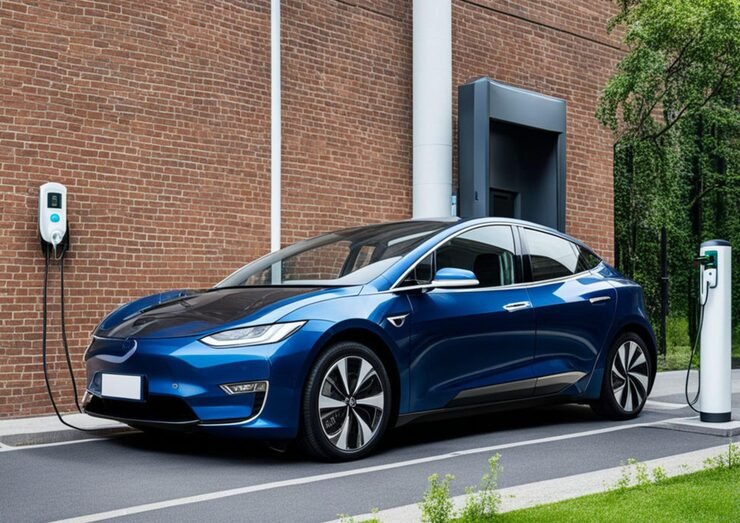

The Rise of Electric Cars: Convenience, Challenges, Drawbacks, and the Future of Green Travel
Cars, known as a means of transportation, are changing faster than I ever imagined. Electric vehicles (EVs) are quiet, loaded with features, powerful, and don’t pollute the air around us. Just a few years ago, they felt like something out of a scientific movie. But in 2024, over 17 million EVs were sold worldwide, and that’s a big count. And the growth hasn’t slowed. There is another 35% jump in 2025. It’s exciting to see these cars everywhere now, not just in headlines or shows.
One thing I find cool and amazing about modern EVs is their “skateboard” design. Basically, the heavy battery sits flat under the floor. This makes the car feel more stable and also gives more room inside for the passenger, making it a comfortable journey. The ride feels smooth, balanced, and very different from anything I’ve experienced in a regular gas car.
EVs are no longer just a trend in one country. China is said to be leading the pack about two-thirds of all electric cars sold globally in 2024 being there, and nearly half of all new cars in China are electric. Europe and the US are catching up fast. In Europe, every one in five new cars is seen to be an electric car, and in the US, around 1.6 million EVs have been sold in 2024. Better technology, more incentives, and more car options are making people switch faster than ever. Every car brand is ready to produce its best electric vehicle and make a showdown in the car market.
Why Electric Cars Are Becoming Popular
Batteries are considered to be the most expensive part of an EV machine, and their prices have dropped a lot recently. In 2024, lithium-ion batteries became about 20% cheaper, making EVs much more affordable than a regular car. China produces a huge share of these batteries, which also helps. Governments are giving people extra reasons to buy them, too tax credits, subsidies, and stricter rules for gas cars. For example, I read that some models in the US saw sales jump by 50% thanks to tax incentives.
Charging is getting easier as well. Every week, I hear about new public chargers being installed. They are getting charged fast, saving time, and saving time. In 2024, roughly 1.3 million new chargers were added worldwide, a 30% jump from the previous year. That means no more worrying about running out of battery on longer trips. China has most of these chargers, but Europe and the US are catching up. For anyone thinking about switching to an EV, this is a huge deal.
EVs are also considered better for the environment. They don’t have tailpipe emissions, and even considering electricity production, they emit much less CO₂ than gas cars over their lifetime. Mid-size EVs, for instance, release 60–70% less CO₂ in Europe and the US. Even where electricity comes from coal, EVs still help. By 2024, EVs had already cut global oil demand by more than a million barrels per day. That’s huge.
List of Electric Vehicles You Should Know.
1. Battery Electric Vehicles (BEVs): A complete electric machine, without a gas engine. They run only on electricity and produce zero tailpipe emissions. Many can go 150–400+ miles on one charge.
2. Plug-In Hybrid Electric Vehicles (PHEVs): These types of vehicles are equipped with both a gas engine and an electric motor. They can run 20–40 miles on electricity before switching to gas, which is considered to be a good time. Perfect if you’re willing to go for short trips but don’t want range anxiety, so you can prefer it.
3. Hybrid Electric Vehicles (HEVs): They are normal hybrids that can’t be plugged in. The engine and braking charge the battery. They’re said to be efficient than regular cars but are not fully electric.
4. Fuel Cell Electric Vehicles (FCEVs): These types contain hydrogen to create electricity. They emit only water vapor, refuel in about 5 minutes, and can travel 300+ miles. The catch? Hydrogen stations are still rare.
Right now, in the market, BEVs are leading the market. Whereas PHEVs and HEVs help if you’re worried about range. FCEVs are promising but still new. Knowing these options makes it easier to decide which EV fits your life and is best for family driving. What do you think? If you want to share your thoughts, comment, and get connected.
Advantages of Going Electric
Electric cars come with some powerful benefits that are reshaping transportation:
1. Zero tailpipe emissions. EVs produce no smoke or pollutants when driving. This means cleaner and fresher air in our cities and less CO₂ warming the planet. On a full “well-to-wheel” basis, EVs burn much less greenhouse gas than gasoline cars, especially as grids get greener.
2. Lower operating costs. Electricity is generally considered to be cheaper per mile than gasoline. used in Non-EVs. EVs also have far fewer moving parts, like no oil changes, spark plugs, or complicated transmissions, so maintenance is usually simpler and cheaper than our regular cars. Over time, drivers can save thousands by paying for electricity rather than fuel and skipping many service visits.
3. Strong performance and smooth ride. Electric motors often deliver instant torque than most regular cars, giving brisk acceleration right from a standstill. Many EVs feel quick and responsive in city driving. They are also extremely quiet and smooth, a major comfort upgrade over noisy engines.
4. Energy independence. By using electricity (which can come from domestic sources), EVs help reduce dependence on imported oil. The booming EV fleet already cut global oil use by about 1 million barrels/day in 2024, a remarkable impact comparable to taking millions of cars off the road.
5. Government incentives. Many countries and states offer rebates, tax credits, or perks like free parking or lane access to EV owners. These incentives can effectively lower the purchase price and add to long-term savings.
6. Technological innovation. Electric cars often get loaded with a pack of the latest tech from advanced driver-assist features to over-the-air software updates and regenerative braking systems. Buying electric can mean getting a modern, future-ready vehicle, easy driving, and sometimes driverless.
Overall, electric cars present a win-win opportunity for consumers and the planet. They drive like normal cars with models now covering all segments from sedans to SUVs but with a bold leap toward sustainability. As battery technology and charging expand, these advantages will only grow stronger.
Challenges and Considerations
No technology is perfect, and EVs come with some trade-offs that drivers should weigh:
1. Range and “refueling” time. Early EVs had limited ranges, and “range anxiety” (fear of running out of charge) has been a concern. While modern BEVs now often exceed 200–300 miles per charge, that can still be less than the range of a gas car. Recharging takes longer than filling a tank; a full “refuel” can take 30 minutes or more at a fast charger, versus a few minutes at a gas pump. For many daily drivers, this is acceptable, but it requires planning for long trips. (In practice, most users charge at home overnight for daily use.)
2. Charging infrastructure. Although charging networks are expanding rapidly, they aren’t yet as ubiquitous as gas stations. Some regions, especially rural or less-developed areas, have sparse fast chargers. According to industry reports, charging stations are growing fast, but high costs can slow rollout. Without convenient access to charging, especially for drivers who cannot charge at home or work, EV adoption can stall.
3. Higher upfront price. EVs have historically carried a premium price due to batteries, though costs are falling. Buyers must consider higher sticker prices (often offset by incentives) and whether that upfront investment is justified by long-term savings. In many places today, EVs can reach price parity with gas cars on a total-cost-of-ownership basis, but budget shoppers still feel the pinch.
4. Battery and resource concerns. EV batteries rely on minerals like lithium and cobalt. Mining and processing these materials carry environmental and ethical challenges. Carriers must eventually replace or recycle batteries, posing disposal issues if not managed well. (On the bright side, battery recycling programs and newer chemistries like LFP are reducing some risks.)
5. Electric grid and utilities. A large shift to EVs will increase electricity demand. Grid upgrades and smart charging systems may be needed to handle many cars charging at once, especially on hot or cold days. Most grids can manage this growth, but it’s an important factor in planning EV roll-out.
6. Mixed market maturity. In emerging economies, EV market share is still low. Cost barriers and a lack of charging deter buyers in many countries. This means global adoption is uneven, something to watch if you live outside major cities or in a developing region.
Despite these challenges, experts believe they can be overcome. Analysts project that if EV growth continues, EVs could make up over one-quarter of new cars by 2025. Governments and industry are actively tackling the downsides: expanding fast-charger networks, investing in battery recycling, and driving down costs.
Examples on the Road
To define this concept, consider everyday use cases. A family commuting over 30 miles each way can easily do a week of driving on one battery charge. For road trips, fast charging stops work similarly to gas stops; you arrive, plug in for a few minutes to grab coffee, and get back on the road. Early adopters report a new routine, most charging happens at home, and public chargers are a backup. Governments and businesses are even rolling out workplace and apartment chargers to cover gaps.
Popular current models illustrate the trend: vehicles like the Tesla Model 3/Y, Hyundai Kona Electric, Volkswagen ID.4, Ford Mustang Mach-E, and Nissan Leaf, among many others, now offer real-world ranges of 200–300 miles. Even high-performance EVs can exceed 300 miles. On the other end, plug-in hybrids like the Toyota Prius Prime and Honda Clarity can travel 20–40 miles on battery before a gas engine kicks in, enough for daily errands on electricity, but still offering full flexibility with gasoline.
The market even includes trucks and SUVs; electric pickups and vans are arriving. Tesla’s Cybertruck, Rivian’s R1T, Ford’s F-150 Lightning, and others show that electric isn’t just for cars, it’s coming for all vehicle types. Public transit and delivery fleets are electrifying too, further multiplying the impact.
Pros and Cons: A Quick Summary Is All You Need
1. Zero Emissions: As we know, EVs have no tailpipe pollution. They cut greenhouse gases dramatically, especially as the grid gets cleaner.
2. Lower Fuel/Running Cost: Electricity often costs much less than gasoline per mile, and maintenance is simpler, hence there are no engine oils, belts, or frequent brake jobs.
3. Instant Torque & Quiet Ride: Electric motors deliver smooth, refined, fast acceleration and very quiet operation, making driving enjoyable as well as comfortable.
4. Energy Independence & Sustainability: Each EV reduces oil consumption globally. EVs displaced ~1 million barrels of oil per day in 2024, which is a huge amount, and even considered huge for climate and energy security.
5. Government Incentives: Many regions still offer incentives like tax credits, rebates, and perks that make EVs financially attractive.
Challenges:
1. Range & Charging Time: Although modern EVs can often exceed 200–300 miles per charge, recharging takes longer than filling a gas tank. Drivers must plan longer trips around available fast-chargers.
2. Charging Infrastructure Gaps: Chargers are expanding, but they are not as ubiquitous as gas stations. In rural areas or certain countries, finding a convenient charger can be tricky. Rapid chargers also cost a lot to install.
3. Higher Upfront Price: EVs typically cost more initially, even though this is changing. Buyers must consider the total cost of ownership; fuel and maintenance savings and incentives often balance the higher sticker price, but the upfront investment remains larger for now.
4. Battery and Resource Limits: EV batteries use materials like lithium and rare metals. Mining these can harm the environment if not managed responsibly and can even disturb the ecosystem. End-of-life battery recycling is still being optimized. The industry is working on solutions, but this is a valid environmental concern.
5. Electric Grid Demand: A massive EV fleet will draw more electricity. Utilities and planners must upgrade grids and encourage off-peak charging to handle the load, or risk blackouts or higher costs.
Despite these cons, the balance is tipping. The disadvantages are shrinking as technology improves. Governments worldwide acknowledge the pros and are tackling the cons with policies, so the overall trajectory is strongly positive.
The Road Ahead
Electric cars are on an unstoppable rise. With each passing year, they become cheaper, more capable, and more abundant. Analysts predict EV sales will keep breaking records by 2030, and many expect the majority of new cars sold globally will be electric. This will mean cleaner air, quieter streets, and a sharp decline in oil demand.
For consumers, the message is clear: It’s time to pay attention to electric vehicles. If you’re shopping for a car, an EV might now fit your needs better than ever before. If you’re a technology enthusiast, the rapid pace of battery and charging innovation is an exciting frontier. And if you care about the planet, nothing does more to cut your carbon footprint per mile.
In summary, electric vehicles have moved beyond novelty into necessity. They offer a powerful vision of the future – one where driving is sustainable, efficient, and packed with modern features. The rise of EVs is more than a trend; it’s a global shift reshaping the way we think about transportation.