
Sunlight becomes power when human ideas learn to listen.
Solar energy devices are no longer niche innovations, they are strategic assets shaping a cleaner, smarter future. As the world pivots toward sustainability, solar technology has moved from rooftops into daily life, quietly powering homes, businesses, farms, and infrastructure. At their core, solar devices are designed to capture sunlight and convert it into usable energy through well-orchestrated scientific processes. From solar panels and water heaters to solar cookers, lights, and chargers, each device serves a distinct purpose while operating on the same foundational principle, harvesting the sun’s power efficiently.
These technologies reduce dependence on fossil fuels, lower energy costs, and align with long-term environmental goals. What makes solar devices compelling is their elegant simplicity, abundant input, minimal waste, and scalable output. Understanding the types of solar devices, their practical uses, and how they work offers clarity in a crowded energy conversation. It also empowers individuals and industries to make informed, future-ready decisions, where innovation meets responsibility, and sunlight becomes a dependable partner in progress.
Types of Solar Devices
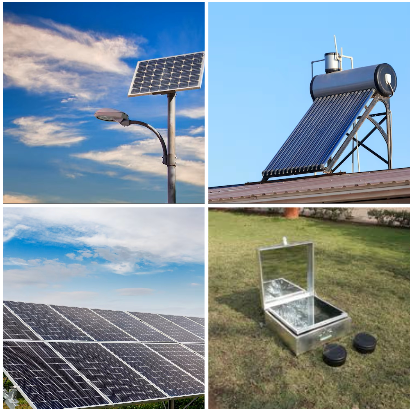
Solar devices can be grouped based on how they use sunlight. Some devices convert sunlight directly into electricity, while others use solar heat for warming water or cooking food. Common solar devices include solar panels, solar water heaters, solar lights, solar cookers, and small portable solar gadgets. Each type is designed for a specific need, but all of them work with the same idea, using free sunlight to reduce dependence on traditional energy sources. This classification helps people choose the right solar device for home, business, or outdoor use.
Solar Panels
Solar panels are devices that convert sunlight into electrical energy. They are made of many small photovoltaic cells, usually made from silicon. When sunlight hits these cells, it causes electrons to move, which produces electricity. This electricity can be used directly to run electrical appliances or stored in batteries for later use. Solar panels work silently, do not create pollution, and require very little maintenance once installed.
Solar panels are commonly placed on rooftops, open fields, and large solar power plants where they receive maximum sunlight. They are used to supply electricity to homes, offices, schools, hospitals, and industries. In many areas, solar panels also help provide power where a regular electricity supply is limited or unavailable. By using solar panels, people can reduce their electricity bills and depend less on fossil fuels, making solar energy a clean and reliable power source for everyday use.
Solar Water Heaters
Solar water heaters are devices that use energy from the sun to heat water for everyday activities such as bathing, washing, and cleaning. The main parts of a solar water heater include solar collectors, connecting pipes, and an insulated storage tank. The collectors are usually placed on rooftops where they receive direct sunlight for most of the day. These collectors absorb solar heat and transfer it to the water flowing through them.
When sunlight falls on the solar collectors, the water inside the pipes gets heated. As the water becomes hot, it naturally rises and flows into the storage tank, while cooler water from the tank moves down into the collectors to be heated again. This process continues throughout the day until enough hot water is stored in the tank. The tank is well insulated so that the water remains hot for long hours, even during the night or early morning.
Solar water heaters are widely used in homes, hotels, hospitals, hostels, and industrial buildings where hot water is needed regularly. They reduce the use of electricity, LPG, or other fuels, which helps lower energy bills and reduces environmental pollution. Solar water heaters work best in sunny regions and are valued for their simple working system, long life, and low maintenance requirements.
Solar Lighting Devices
Solar lighting devices are systems that use sunlight to provide lighting without relying on grid electricity. These devices mainly include solar street lights, solar garden lights, solar lamps, and solar lanterns. Each device has a small solar panel, a rechargeable battery, a controller, and an LED light. During the daytime, the solar panel absorbs sunlight and converts it into electrical energy, which is stored in the battery. A built-in controller manages the charging process and prepares the system for nighttime operation.
When daylight fades, the solar lighting device automatically turns on using the energy stored in the battery. The stored electricity powers energy-efficient LED lights, providing bright illumination throughout the night. Solar street lights are commonly used on roads and highways, while garden lights and lamps are used for outdoor decoration and safety. Solar lanterns are portable and useful in homes, rural areas, and during power cuts. Solar lighting devices are easy to install, require no external wiring, and work reliably in areas without electricity, making them a practical and energy-saving lighting solution.
Solar Cookers
Solar cookers are devices that use sunlight to cook food without the need for gas, electricity, or firewood. They work by collecting and concentrating solar heat onto a cooking vessel. Most solar cookers have reflective surfaces, such as mirrors or polished metal sheets, which direct sunlight toward a central area where the cooking pot is placed. This concentrated heat raises the temperature inside the cooker and allows food to cook slowly and evenly.
When sunlight enters the solar cooker, the trapped heat is absorbed by the cooking pot, usually dark in color to absorb more heat. The heat remains inside the cooker, creating a warm environment similar to an oven. Solar cookers are commonly used in homes and rural areas where fuel resources are limited. They are eco-friendly, reduce air pollution, and help save money on cooking fuel. Since food is cooked at a steady and natural temperature, solar cooking also helps retain nutrients and flavor.
Solar Chargers and Small Solar Devices
Solar chargers and small solar devices are designed to provide power on a small scale using sunlight. These devices include solar phone chargers, solar power banks, small fans, radios, and emergency lights. They are fitted with compact solar panels that absorb sunlight and convert it into electrical energy. This energy is either used directly to run the device or stored in a small built-in battery for later use.
These solar devices are lightweight, portable, and easy to use, making them ideal for travel, outdoor activities, and emergency situations. They are especially useful in remote or rural areas where a regular electricity supply is not available. During power cuts, solar chargers help keep essential devices like mobile phones and radios working. Small solar devices show how solar energy can support daily needs in a simple, affordable, and practical way.
Conclusion
Solar devices offer a smart and sustainable way to meet energy needs using natural sunlight. From large solar panels to small portable chargers, each device plays a role in reducing electricity costs and protecting the environment. As solar technology continues to improve, these devices are becoming more efficient, affordable, and widely used. Choosing solar energy is not only an eco-friendly decision but also a long-term investment in clean and reliable power.