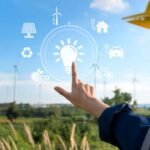

Every solar panel and every seed planted whispers a promise to tomorrow.
There’s a particular kind of guilt that creeps in when you toss a plastic bottle into the trash instead of the recycling bin, or leave the lights on in an empty room. Most of us feel it, quietly, and then move on with our day anyway. But somewhere in the background, away from our daily distractions, a much bigger shift has been happening. Green technology and sustainable innovation are no longer buzzwords tossed around at climate conferences. They are showing up in our homes, our cars, our cities, and even the food on our plates.
What makes this shift genuinely interesting is how quiet it’s been. There was no single dramatic announcement, no one moment where the world decided to change course. Instead, engineers, scientists, farmers, and everyday people have been chipping away at the problem for years, building solutions that are finally becoming affordable and practical enough for ordinary use. This article looks at how sustainable innovation is reshaping the world around us, one invention at a time, and why the story is far from finished.
The Renewable Energy Revolution
Not too long ago, solar panels were something only the wealthy or the deeply committed installed on their rooftops. The cost was high, the technology clunky, and the payoff felt distant. That’s changed dramatically. Solar and wind energy have become some of the cheapest sources of electricity in many parts of the world, which is not a small detail. Cheap and clean rarely go together in history, and yet here we are.
Entire countries are now running significant portions of their power grids on renewable energy, something that felt almost impossible to imagine two decades ago. Massive wind farms line coastlines, and solar fields stretch across deserts that were once considered useless land. The shift isn’t just symbolic anymore. It’s measurable, in gigawatts and in falling electricity bills.
Battery storage technology has played a quiet but crucial role here too. The old argument against renewables was always “what happens when the sun isn’t shining or the wind isn’t blowing.” Better batteries are slowly answering that question, storing excess energy for the moments when nature doesn’t cooperate.
- Falling costs of solar and wind installations
- Growing share of national power grids running on clean energy
- Improved battery storage solving the reliability problem
- Desert and coastal land repurposed for large-scale energy projects
Electric Vehicles and Sustainable Transportation
Cars used to be judged almost entirely on speed, style, and price. Now, increasingly, they’re judged on emissions too. Electric vehicles have gone from a niche curiosity to something you’ll spot in almost any city traffic jam, quietly gliding past without the usual engine noise or exhaust fumes.
What’s pushed this forward isn’t just environmental concern, if we’re being honest. It’s also that electric vehicles have simply gotten better. Longer battery range, faster charging, lower running costs over time. People aren’t only buying them to save the planet. They’re buying them because they genuinely make sense now.
Public transportation is catching up too, with electric buses and trains slowly replacing older diesel-powered fleets in many cities. Even bicycles have had their own quiet revolution, with electric bikes making cycling a realistic option for people who once dismissed it as too tiring or impractical for daily commutes.
Smart and Energy-Efficient Homes
Homes are getting smarter, and not just in the flashy voice-assistant sense. Sensors now adjust lighting and temperature automatically, cutting down on wasted energy without anyone having to think about it. Smart thermostats learn a household’s habits and quietly optimize heating and cooling in the background.
Even something as simple as switching to LED lighting across a home adds up to meaningful energy savings over a year. None of this feels dramatic on its own, but stacked together, it’s changing how much energy an average household consumes.
Sustainable Agriculture and Food Technology
Farming has always shaped the world in ways most city dwellers rarely think about. Today, sustainable agriculture is trying to grow more food while using less water, less land, and fewer harmful chemicals. Vertical farms are popping up in cities, growing vegetables in stacked layers using a fraction of the water traditional farming requires.
Precision agriculture, using sensors and data to water and fertilize only where it’s actually needed, has also cut down enormous amounts of waste on large farms. It’s not glamorous work, but it might be one of the most important quiet shifts happening in green technology right now.
Waste Management and Recycling Innovations
Recycling used to feel like a simple, almost symbolic act. Rinse the bottle, toss it in the blue bin, hope for the best. Now, waste management technology is getting far more sophisticated. Smart sorting systems using cameras and sensors can separate recyclable materials faster and more accurately than human hands ever could.
Some cities have started turning waste into actual energy, burning non-recyclable trash in controlled facilities to generate electricity instead of letting it rot in landfills for decades. Composting technology has also improved, turning food waste into usable soil far faster than traditional methods.
Plastic, though, remains a stubborn problem. Innovators are experimenting with biodegradable alternatives and better recycling processes, but the sheer scale of plastic waste already sitting in oceans and landfills means this fight is far from over.
- AI-powered sorting systems improving recycling accuracy
- Waste-to-energy plants reducing landfill dependency
- Faster composting technology for food waste
- Ongoing research into biodegradable plastic alternatives
Green Building and Eco-Friendly Architecture
Buildings have quietly become one of the biggest contributors to carbon emissions worldwide, largely because of how much energy it takes to heat, cool, and light them. Green building design is tackling this head-on, using materials and layouts that reduce energy needs from the very start rather than patching the problem later.
Rooftop gardens, natural ventilation systems, and materials that reflect heat instead of absorbing it are becoming common in new construction. Some buildings now generate as much energy as they consume, turning what used to be a purely environmental cost into something closer to neutral.
Corporate Sustainability and Green Business Practices
Companies have noticed that customers care about sustainability now, and whether that shift is driven by genuine values or smart business sense, the outcome often looks similar. More businesses are switching to renewable energy for their operations, reducing packaging waste, and publishing sustainability reports that used to be optional footnotes.
Water Conservation Technology
Fresh water is far more limited than most people realize, and technology is stepping in to stretch it further. Smart irrigation systems, leak-detection sensors, and water recycling systems in homes and industries are quietly cutting down on wasted water in ways that barely make headlines but matter enormously over time.
Challenges in Adopting Green Technology
None of this comes easily, and it would be dishonest to pretend otherwise. Green technology, despite falling prices, still requires upfront investment that many households, businesses, and even governments struggle to justify, especially in poorer regions where basic infrastructure is still catching up.
There’s also the challenge of outdated systems. Power grids built decades ago aren’t always designed to handle the flow of renewable energy efficiently, and upgrading that infrastructure takes both time and enormous funding that not every country has readily available.
Then there’s simple human habit. Old ways of doing things are comfortable, and change, even good change, tends to meet resistance. Convincing an entire population to shift how they drive, build, farm, and consume is a slow process, no matter how good the technology gets.
Despite all this, the direction of change seems fairly clear. The obstacles are real, but they’re being chipped away steadily, year after year, by people who refuse to accept that things have to stay the way they’ve always been.
The Road Ahead: Policy and Public Awareness
Government policies, subsidies, and international agreements play a bigger role in this story than most people realize. Tax breaks for solar installations, stricter emission standards for vehicles, and funding for clean energy research have all quietly accelerated progress that market forces alone might have taken decades longer to achieve.
Public awareness matters just as much. The more people understand and demand sustainable options, the faster businesses and governments tend to respond. Change driven only from the top rarely lasts. Change demanded from the ground up tends to stick.
Green technology and sustainable innovation aren’t some far-off dream reserved for future generations to figure out. They’re already here, quietly reshaping how we power our homes, move through our cities, grow our food, and build the spaces we live in. The road ahead still has real obstacles, but every solar panel installed, every electric vehicle on the road, and every sustainable choice made today is a small, steady step toward a cleaner, more livable future. The question was never really whether this shift would happen. It’s simply a question of how fast we’re willing to move.