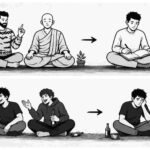

Respect yourself first, and the rest of the world eventually follows.
Quick question. How long would you sit in a room where people mock you, ignore you, laugh at your expense? Be honest. A week? A year? Most people stay way longer than they’d ever admit out loud. Not because they like it. Because leaving feels harder than staying, somehow, even when staying is quietly wrecking something inside them. That something is self-respect. And once it starts slipping, it doesn’t stop at “how others treat you.” It rewires how you see yourself too. This isn’t a motivational-quote kind of article. It’s about why self-respect, more than discipline, more than hustle culture, more than any productivity hack, might genuinely be the strongest thing driving real personal growth. And why walking out of the wrong room can matter way more than any goal-setting worksheet.
What Self-Respect Actually Means
Not arrogance. Not “I’m better than everyone here.” Simpler than that, actually. Self-respect is knowing your worth well enough that you’re not waiting around for a room full of people to confirm it for you. It’s refusing to accept less than you deserve. From others. And, yeah, from yourself too, that part gets skipped a lot.
People mix this up with confidence constantly. They’re not the same. Confidence says “I can do this.” Self-respect says “I deserve to be treated decently while I do it.” You can absolutely have one without the other. Plenty of confident people still let others walk all over them. Self-respect is the thing that actually stops that.
Staying in the Wrong Room Builds the Wrong Character
Here’s the uncomfortable part. Stay in a room where you’re constantly ignored, joked about, made the punchline, and you don’t just “tolerate” it forever with zero cost. You adjust. And that adjustment turns into a character trait. Whether you meant for it to or not.
It always starts small. One joke you let slide. One comment you laugh off, even though, if you’re being honest, it actually stung a little. Do that enough times, same room, same people, and something shifts in you. You stop reacting. Not because it stopped bothering you. Because you got used to it. And getting used to disrespect is its own quiet kind of damage, it convinces you, slowly, that this is just how things are. That you’re the guy people joke about. That you don’t get to expect better.
That’s the real danger, honestly. It’s not any single comment that does the damage. It’s what staying, and absorbing it over and over, slowly turns you into.
Sometimes Leaving Is the Most Respectful Thing You Can Do for Yourself
Leaving a room, a friend group, a conversation, that’s not weakness. It’s often the clearest self-respect move a person can make. Staying somewhere that keeps disrespecting you, hoping it magically changes on its own, mostly just teaches everyone in that room your boundaries are negotiable.
And no, this isn’t “storm out dramatically every time someone says one thing you don’t like.” That’s not it either. It’s knowing the difference between a bad moment and a pattern, and having enough self-respect to not normalize the pattern just because leaving feels awkward in the moment.
Self-Respect Goes Both Ways
People miss this constantly: self-respect isn’t only about demanding respect for yourself. It’s also about actually giving it. You can’t build real self-respect while disrespecting everyone around you, that’s not self-respect, that’s ego wearing a costume.
Real self-respect is give and take. Respect people genuinely. Expect the same back. When that stops being a two-way street, when you’re giving respect and getting mockery in return, that’s usually your clearest signal something needs to change. Either their behavior. Or your presence in that room.
A Small Story About a Label That Wasn’t True
Let me tell you something that actually happened to me, because it explains this better than any theory I could write. I don’t talk much. Never really have. A friend introduced me to one of his friends once and said, casually, “he speaks a little less.” No harm meant, probably. That guy became my friend too. Then he introduced me to more of his friends. Same line. Every single time. “He speaks less.” And eventually, that’s just what I was to that whole group. Not a person. A tag.
Here’s the part that actually bugs me looking back: I let it happen. Didn’t say a word the first time, or the second, or the third. Just absorbed the label, because correcting it felt like more effort than it was worth in that moment. But that was the mistake. I should’ve just said it, plainly, right there, “I don’t speak less, I speak when it matters.” One sentence. That’s genuinely all it would’ve taken to stop that label before it stuck for good.
That whole experience taught me something about self-respect I hadn’t really understood before. It’s not always some big confrontation. Sometimes it’s just being straightforward in the small moment, before that small moment quietly becomes the permanent story people tell about you.
Being Straightforward Is Underrated
A lot of people dodge being direct because it feels confrontational, or rude, or like too much effort over something “small.” But small moments are exactly where self-respect gets built, or lost. Saying what’s actually true, calmly, in the moment, does more for your self-respect than staying quiet ever will.
Doesn’t have to be aggressive. Just honest. “That’s not true about me” is a complete sentence on its own. So is “I’d rather you didn’t joke about that.” Being straightforward like this teaches people how to treat you, quietly, no drama needed, just by refusing to let the wrong version of you become the accepted one.
Why Self-Respect Beats Motivation Every Time
Motivation is flaky. Shows up some days, vanishes on others, depending on your mood, your sleep, whatever kind of week you’re having. Self-respect doesn’t work that way. It’s not a feeling you sit around waiting for. It’s closer to a standard, one you hold yourself to even on the days you genuinely don’t feel like it.
People with strong self-respect push through hard things not because they’re endlessly inspired, they’re usually not, but because letting themselves down would cost more than the discomfort of just doing the hard thing. That’s a completely different engine than motivation. And honestly, a far more reliable one.
Training Your Personality to Handle Disrespect Better
Self-respect isn’t something you’re just handed at birth in full supply. It gets trained. Same as any skill. Which, in practice, looks like:
- Practicing saying no to things that don’t sit right with you
- Speaking up in small moments instead of letting them slide
- Noticing patterns of disrespect instead of excusing them one at a time
- Getting okay with a little discomfort instead of chasing peace at any cost
None of it happens overnight, obviously. But every small rep, every time you speak up instead of shrink, makes the next one just a little easier.
Becoming a Respected Person Starts With Respecting Yourself
People generally treat you the way you’ve silently trained them to. Keep accepting disrespect, and that becomes the baseline, quietly, without anyone announcing it. Hold a line calmly, consistently, without turning it into a big scene, and that becomes the new baseline instead. Respect from other people is rarely demanded loudly. Usually, it’s just the natural result of someone who already, clearly, respects themselves first.
Conclusion
Self-respect doesn’t need a speech to prove itself. Most of the time it’s built in small, unremarkable moments, the joke you don’t laugh off, the label you correct instead of quietly accepting, the room you choose to leave instead of tolerating one more year. It’s not about turning harsh or unapproachable. It’s about knowing your own worth well enough that you stop handing it over to people who were never going to protect it for you anyway. Give respect. Expect it back. And when a room stops offering that trade, trust yourself enough to walk out. That, more than any motivational quote ever printed on a poster, is what actually keeps a person moving forward.