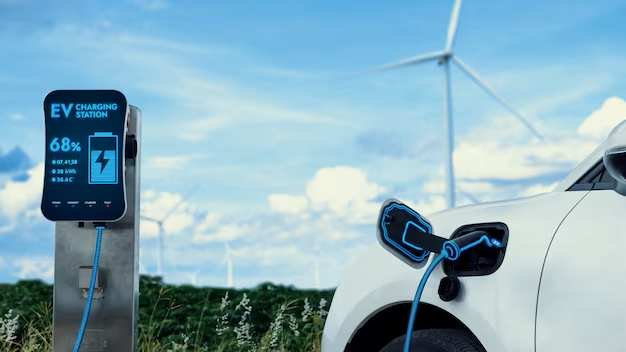

The quietest revolution on the road runs on nothing but electricity.
Ask five people about electric vehicles, and you’ll get five different answers. One says EVs are the future, plain and simple, clean, obviously the way forward. Another brings up lithium mining and asks, fair enough, how “clean” a car really is if the battery came out of a pit dug into the earth somewhere. Someone else just points at the price tag and says nope. And there’s always that one person who swears EVs aren’t practical for daily life yet. Here’s the honest bit, all of them are a little right. And a little wrong too. This isn’t really a yes-or-no topic, not even close. It’s a technology mid-transition, real strengths, real problems, still figuring itself out. So let’s just get into it properly, no picking a side for the sake of picking one.
What’s Actually Driving the EV Shift Right Now
EVs aren’t some brand-new invention, by the way, they’ve existed in different forms for over a century now. What’s actually changed lately is battery tech finally getting good enough, and cheap enough, to work for regular people instead of just hobbyists and early adopters. Add rising fuel prices, tighter emissions rules in a lot of countries, real range improvements, and you get the shift happening right now.
Automakers threw serious money at this too. A handful of EV models a decade ago has turned into dozens, spread across nearly every price bracket now, budget hatchbacks all the way up to full-size SUVs. Momentum like that doesn’t just reverse.
The Battery: A Technology Older Than People Realize
Worth pausing on this one. Batteries didn’t just show up for cars one day. They’ve quietly run everyday life for generations already, wall clocks, wristwatches, TV remotes, torches under the bed. That little cylindrical cell in your remote and the massive pack under an EV’s floor? Same basic chemistry. Just scaled up hugely and refined for a much bigger job.
What’s genuinely new isn’t the idea of a battery, it’s the scale of it. EV batteries now power homes through backup systems, shops running off solar-battery setups, streetlights storing daytime charge for after dark. The humble battery quietly became one of the most important pieces of tech in modern life, and cars are just its biggest job yet.
No Noise Pollution Is a Bigger Deal Than It Sounds
People underrate this constantly, genuinely. An EV doesn’t roar or rev or rattle. It just moves, almost silently. Stand near a busy road full of EVs instead of combustion engines and the difference hits you immediately, less noise, less vibration, honestly, a calmer feeling overall.
Matters more in cities than people give it credit for. Chronic traffic noise has real health effects, elevated stress, worse sleep, constant background strain that most city dwellers have just learned to tune out without realizing it. A quieter fleet of cars isn’t just a nice bonus. It’s a real quality-of-life shift, easy to dismiss until you actually stand there and feel it for yourself.
The Real Story Behind Lithium and Battery Pollution
This is the complaint that comes up most, and it deserves a real answer, not a dismissive one. Lithium mining does carry real environmental costs. Water-heavy extraction in places like South America’s “lithium triangle.” Habitat disruption. Energy-intensive processing. Pretending EVs are pollution-free start to finish just isn’t true, and nobody serious claims otherwise.
But here’s what people skip constantly, the comparison that actually matters, EVs versus the full lifecycle of a petrol or diesel car. Oil extraction, refining, transport, decades of tailpipe emissions, all of that carries its own massive environmental cost. It’s just less visible, spread thin across the vehicle’s whole life instead of front-loaded at manufacturing where it’s easy to point at.
Most independent lifecycle studies still put EVs ahead on total emissions, even factoring in battery production, especially as power grids lean more into renewables. Not a perfect, guilt-free technology. Nothing is. But “not perfect” and “worse than the alternative” are two very different claims, and the second one really doesn’t hold up under scrutiny.
Why EVs Cost More Right Now
The price complaint’s fair, rooted in something real. Batteries cost a lot to manufacture, and they’re still the biggest chunk of an EV’s total price. Add newer, less mature supply chains next to a century of combustion-engine manufacturing scale, and yeah, you get a higher sticker price. For now.
That gap’s been shrinking steadily though, year after year, as battery production scales and the tech improves. Plenty of markets offer subsidies or tax breaks too, which soften the upfront hit. Genuinely more expensive today than a comparable petrol car, in most cases, sure. But “expensive forever” just isn’t the trend line this industry’s actually on.
Charging Infrastructure Is the Real Bottleneck
Honestly, this is the everyday-use complaint that holds up best out of all of them. Cities with solid charging networks make EV ownership genuinely smooth, no drama. Areas without that yet? Real hassle, planning trips around chargers, dealing with slow public stations, no reliable home charging if you’re in an apartment without a dedicated spot.
Improving fast, but unevenly. Some regions are miles ahead already. Others are still catching up, slowly. Anyone actually considering an EV needs to check their local charging situation honestly, not just assume it’ll work exactly like a petrol station always has.
Range Anxiety: Still Valid, But Fading Fast
A few years back, “will I run out of charge” was a genuine daily worry. Ranges have jumped a lot since, plenty of newer EVs comfortably hit 300 to 400 kilometers on a full charge now, which covers most people’s actual daily driving several times over, easily.
Long road trips are where this still bites a little, mainly because it needs planned charging stops in a way petrol runs never did. That’s a real lifestyle adjustment, not some minor footnote, and it’s completely fair for people to weigh that before switching over.
Total Cost of Ownership Tells a Different Story Than the Sticker Price
Look past the upfront number and the math shifts a lot. EVs have way fewer moving parts than combustion engines, no oil changes, fewer things wearing out, lower maintenance across the board. Electricity’s usually cheaper per kilometer than fuel too, sometimes a lot cheaper, depending on local rates.
Stretch that across several years of ownership, and a lot of EV owners end up spending less overall than they would’ve with an equivalent petrol car, even with that higher purchase price upfront. It’s a longer game, not an instant win, and that distinction gets lost a lot when people just compare sticker prices side by side.
What’s Coming Next in EV Technology
Solid-state batteries are getting most of the attention right now, promising faster charging, longer range, better safety than current lithium-ion cells. Not mainstream yet. But several major manufacturers are actively racing toward commercial production within the next handful of years.
Battery recycling’s becoming a much bigger focus too, tackling one of the more legitimate long-term worries about EVs. As recycling tech matures, recovering and reusing lithium, cobalt, and other materials will meaningfully soften the mining impact critics rightly bring up today.
So, Are EVs Right for Everyday Use?
Depends who you ask, honestly, and it’s worth just saying that instead of pretending there’s one answer that fits everyone. Someone with home charging, a predictable commute, decent local infrastructure? They’ll likely find an EV genuinely practical, cheaper to run long-term too. Someone doing a lot of long-distance driving through patchy-charging areas, or with zero home charging option at all, might reasonably find it more friction than it’s worth right now, today, as things stand.
That gap keeps shrinking every year though, as infrastructure spreads and prices drop.
Conclusion
Electric vehicles aren’t some flawless miracle technology, and they’re not the scam some critics paint them as either. Somewhere in between, genuinely useful, still maturing, real tradeoffs attached. Cleaner and quieter to actually drive, better on long-term cost, but with real questions around mining impact, upfront price, and charging access that deserve honest answers instead of marketing spin. The direction’s fairly clear though. Batteries have quietly run daily life for decades already, clocks, remotes, now entire vehicles and homes, and that trend isn’t reversing anytime soon. The tech will keep getting better. The real question was never whether EVs are the future. It’s just how fast the rough edges get smoothed out along the way.