
The Moon wasn’t just reached; it inspired a nation to dream bigger.
Long before Chandrayaan-3 made headlines for landing near the Moon’s south pole, there was a quieter mission that made that landing possible in the first place, “Chandrayaan-1”. There was no touchdown, no live broadcast of a lander easing onto the surface. But it gave India something it didn’t have before real experience navigating deep space, and enough data about the Moon to change how scientists thought about it.
India’s journey into deep space reached a historic milestone with Chandrayaan-1, also known as the country’s first mission to the Moon. Before this mission, only a few nations had successfully explored the lunar surface. On 22nd October 2008, the Indian Space Research Organisation (ISRO) launched Chandrayaan-1, proving that India could design, build, and operate an advanced lunar spacecraft which is capable of conducting world-class scientific research.
The mission was not only about reaching the Moon. Its primary goal was to understand the Moon’s surface, minerals, chemical composition, and geological history using advanced science. Chandrayaan-1 carried equipment from both India and several international space agencies, making it one of the most important international scientific collaborations of the time.
One of the greatest achievements by Chandrayaan-1 was that it discovered evidence of water molecules on the Moon. This finding changed scientists’ understanding of the lunar environment and influenced future Moon missions around the world. Although the mission ended earlier than originally planned, it completed almost all of its scientific objectives and became one of India’s greatest space achievements.
It is also a historical moment for ISRO, as at the time, India’s space program was known mostly for satellites that stayed close to home, communication satellites, weather satellites, that sort of thing. Going to the Moon meant something different. It meant tracking a spacecraft across nearly 400,000 kilometres, keeping it alive that far from Earth, and building instruments that had simply never been made in India before.
Today, Chandrayaan-1 is remembered as the mission that established India as a major player in global space exploration and laid the foundation for the successful Chandrayaan-2 and Chandrayaan-3 missions.
Who Built It, and Why It Happened
Chandrayaan-1 was built by ISRO (Indian Space Research Organisation), but the idea behind it didn’t appear overnight. For years, Indian scientists had been discussing abiut the project of sending a mission to the Moon. And later the project finally received official approval from the Government of India in 2003, when Dr. K. Kasturirangan was ISRO Chairman.
At that point, ISRO had a solid track record putting satellites into orbit around Earth. Reaching the Moon was a whole different challenge. It meant developing reliable deep-space communication, advanced navigation and tracking systems, and scientific instruments capable of studying another world all technologies that India had little or no experience with at the time. Much of that capability had to be built from the ground up.
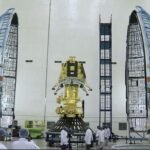
The spacecraft itself wasn’t particularly large, it was small. About 1.5 metres on each side, roughly cube-shaped, built on the I-1K platform ISRO had already used for its Earth-observation satellites. That was a deliberate call reuse a design that already worked, and spend the real engineering effort on the parts that were genuinely new. At liftoff, it weighed around 1,380 kilograms, though that dropped a lot once it burned through its fuel getting into lunar orbit.
The goal wasn’t to land. That ambition came later, with Chandrayaan-2 and Chandrayaan-3. Chandrayaan-1’s job was simpler on paper orbit the Moon, map it chemically and mineralogically, build a detailed 3D picture of both the near and far side, and prove that India’s ground systems and technology could actually pull this off from that far away. It also aimed to gather valuable scientific data that would deepen our understanding of the Moon. Half science mission, half proof of concept. The mission wasn’t just about reaching the Moon it was about proving that India had the technology and expertise to explore deep space successfully.
The Launch, the Journey, and What Was on Board
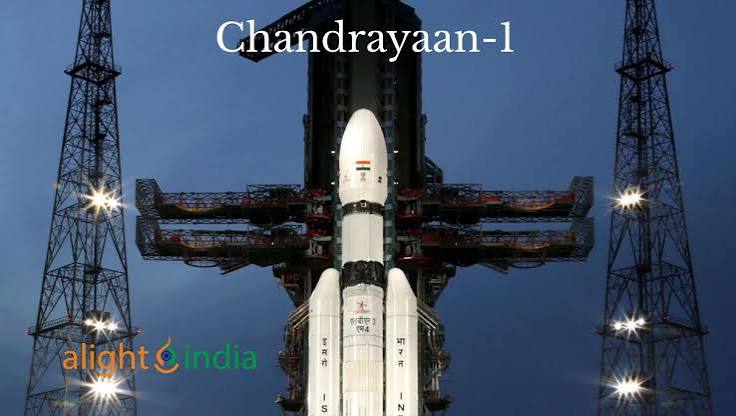
Chandrayaan-1 lifted off on 22nd October 2008, early in the morning, from the Satish Dhawan Space Centre in Sriharikota, on India’s east coast. It rode aboard the PSLV-XL(Polar Satellite Launch Vehicle), it was considered ISRO’s trusted workhorse rocket, the same family that would later launch India’s Mars Orbiter Mission. It didn’t head straight for the Moon. Instead, it spent nearly two weeks circling Earth in progressively wider orbits, firing its engine after each loop to build up the speed needed for the journey.
It reached lunar orbit on 8th November 2008, and over the following days, engineers gradually lowered it into a circular polar orbit about 100 km above the Moon’s surface. Then, on 14 November, it released a small probe the Moon Impact Probe (MIP) which descended near the Shackleton Crater in the Moon’s south polar region. That moment made India the fourth country to place a spacecraft on the Moon’s surface, after the United States, the Soviet Union, and Japan.
As for what it carried: 11 scientific instruments, roughly split between those built in India and those contributed by NASA, the European Space Agency (ESA), and other international partners. There were cameras for mapping the terrain, spectrometers to study the Moon’s surface chemistry, X-ray instruments to analyse its elemental composition, and NASA’s Moon Mineralogy Mapper (M³) an instrument that would later play a key role in the discovery of water molecules on the Moon. This mix of Indian and international hardware wasn’t just a footnote; it showed India working alongside some of the world’s leading space agencies as an equal scientific partner.
Chandrayaan-1 wasn’t built by one scientist or even one ISRO centre. It was the result of years of work by hundreds of engineers, researchers, and technicians across the organisation, with Mylswamy Annadurai leading the mission as Project Director. Since this was India’s first attempt at reaching the Moon, almost every team had to solve challenges they had never faced before.
The spacecraft itself was designed to be as light as possible without sacrificing strength. Its main structure was built from aluminium alloys and composite materials, while a 700-watt solar panel supplied most of its power, backed up by a lithium-ion battery whenever sunlight wasn’t available. It also carried antennas for communication, onboard computers, navigation sensors, and a liquid propulsion system that helped guide it from Earth to lunar orbit. Every part had to continue working despite the extreme heat, cold, radiation, and vacuum of space.
What It Found and Why People Still Talk About It
The mission was meant to last two years. It didn’t. Ground stations lost contact on 28th August 2009, about ten months after launch, most likely because of a power failure caused by overheating, a fairly common risk for spacecraft operating that close to the Moon without much shielding from the sun. Read as a headline, that sounds like a failure. Read the details, though, and it’s clear ISRO had already checked off around 95% of the mission’s goals by the time it went quiet. That’s the number people usually point to when they call it a success.
The biggest find, by far, was water. Data collected by Chandrayaan-1, analysed after the mission had already ended, showed signs of water and hydroxyl molecules across the Moon’s surface, more concentrated near the poles. Nobody was expecting that. The Moon had been treated as bone-dry for decades, and this single result changed where later missions chose to look, including India’s own Chandrayaan-2 and Chandrayaan-3, both of which targeted the polar regions.
It also picked up evidence supporting the idea that the Moon was once entirely molten, a magma ocean, essentially and mapped out concentrations of titanium, calcium, iron, aluminium, and magnesium across the surface. None of that makes headlines the way “water on the Moon” does, but it’s the kind of data lunar scientists still cite today.
So, Was It a Success?
If you’re just going by the original two-year plan, no, Chandrayaan-1 ended early. But judged by what it actually delivered, it’s hard to call it anything but a win. It gave India its first real experience with deep-space operations, produced science that genuinely shifted how we understand the Moon, and did it for a fraction of what comparable missions from other countries have cost. More than anything, it built the foundation every Chandrayaan mission since has stood on, including the one that finally landed.
Chandrayaan-1 wasn’t India’s Moon landing. It was the mission that made the landing possible.