
Every brick in Punjab remembers a battle, a prayer, or a king.
There’s a moment that happens to almost every traveler standing inside an old Punjabi fort for the first time. You touch a wall, thick enough to have stopped cannon fire once, and something about it just quiets you down. Punjab doesn’t get talked about for its heritage sites nearly as often as Rajasthan does, and honestly, that’s a shame, because what’s standing here tells just as rich a story, only told in a different accent.
This is land that shaped empires, sheltered gurus, and watched the rise and fall of the Sikh Empire under Maharaja Ranjit Singh. Its forts and historical sites carry that weight quietly, without needing to shout about it the way more famous monuments sometimes do. If you’re planning a heritage trip through Punjab, here’s where that journey genuinely deserves to take you.
Gobindgarh Fort, Amritsar
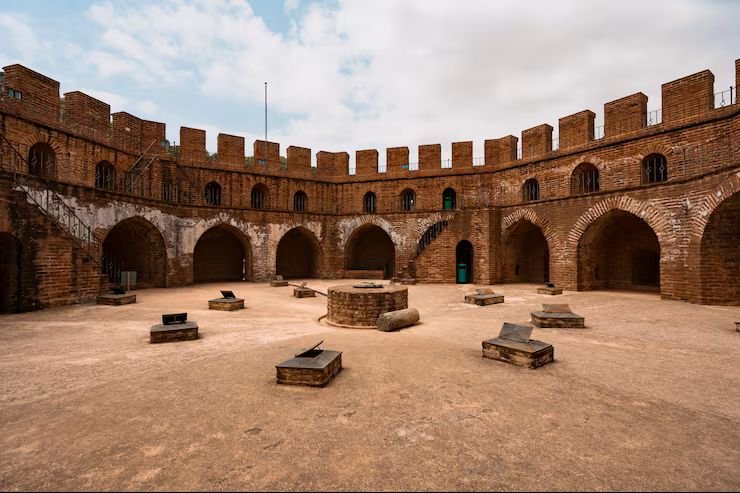
Right in the heart of Amritsar, a short walk from the Golden Temple, sits a fort most visitors don’t even realize exists until they stumble across its towering gates. Gobindgarh Fort has worn several identities over the centuries, first built by local chiefs, later strengthened by Maharaja Ranjit Singh as a key military stronghold, and eventually used by the British as an armory.
What makes a visit here genuinely worthwhile now is how the fort has been restored into a living heritage experience rather than a quiet museum. Light and sound shows recreate the fort’s turbulent history after dark, and small exhibits inside let you handle replicas of old coins, weapons, and turbans once worn by Sikh warriors. For a first-time visitor, it’s an easy, engaging way to step straight into Punjab’s military past.
- Located minutes from the Golden Temple, easy to combine in one day
- Evening light and sound show recreates Punjab’s Sikh Empire history
- Museum sections display original weapons, coins, and royal artifacts
Qila Mubarak, Patiala
Patiala’s Qila Mubarak isn’t just a fort, it’s practically the birthplace of the city itself. Built in 1763 by Baba Ala Singh, the founder of the princely state of Patiala, this fort complex quietly witnessed the growth of an entire royal dynasty from its walls outward.
Inside, the Sheesh Mahal, the Palace of Mirrors, is where the visit truly earns its reputation. Intricate frescoes cover the walls and ceilings, blending Mughal, Rajput, and European artistic influences in a way that feels distinctly Patiala, distinctly its own. The palace once housed one of the largest collections of medals and coins in Asia, and even in its quieter, more weathered state today, you can still sense the scale of ambition that built it.
Walking through the fort’s narrow inner lanes, past sections still inhabited by descendants of the original royal family, gives the whole place a lived-in feeling that a lot of purely preserved monuments simply don’t have.
Bahadurgarh Fort, Patiala
Not far from the city, Bahadurgarh Fort holds a quieter but no less important place in Sikh history. Originally built in the 16th century and later reinforced by Maharaja Karam Singh in honor of Guru Tegh Bahadur, the fort blends military architecture with genuine spiritual significance.
The fort now houses a gurudwara within its walls, drawing pilgrims alongside history enthusiasts, which gives it a distinctly different atmosphere from most other fortified sites in the region. It’s less about grandeur here and more about quiet reverence, the kind that settles over you without anyone having to explain why.
Anandpur Sahib and Keshgarh Sahib Fort
Anandpur Sahib holds one of the most significant places in Sikh history, as the site where Guru Gobind Singh founded the Khalsa in 1699. Keshgarh Sahib, one of the five Takhts of Sikhism, stands here as both a place of worship and a historical landmark rolled into one.
The surrounding area also includes several smaller forts built to defend the town during turbulent periods of conflict, remnants that history enthusiasts can still explore alongside the main pilgrimage site. Visiting Anandpur Sahib isn’t just a heritage stop, it’s an experience that blends deep faith with equally deep history, and first-time visitors often leave more moved than they expected to be.
Ram Bagh Palace, Amritsar
Built as a summer retreat for Maharaja Ranjit Singh, Ram Bagh Palace sits inside a sprawling garden complex that offers a gentler, greener contrast to the stone fortifications elsewhere in the state. The palace now houses a museum dedicated to the Maharaja’s life and reign, with portraits, weapons, coins, and manuscripts giving visitors a genuinely personal window into the ruler who unified Punjab under Sikh rule.
The surrounding gardens, well maintained and genuinely peaceful, make this one of the more relaxing stops on a heritage trail that otherwise involves a fair amount of walking through stone corridors and old ramparts.
Fort of Phillaur
Less visited than the others on this list, Phillaur Fort sits along the historic Grand Trunk Road, once a critical military checkpoint during both Sikh and later British rule. Built originally under Ranjit Singh’s reign, the fort’s strategic location made it a key defensive structure controlling movement across the region.
Today, the fort houses a police training academy, so access is more limited than the other sites here, but its exterior architecture and historical significance still make it worth a stop for travelers tracing the fuller military history of Punjab rather than just its palaces.
Why Punjab’s Heritage Deserves More Attention
What ties all these sites together isn’t just old stone and royal history. It’s the way Punjab’s forts blend military strength with genuine spiritual and cultural depth, something that feels distinct from heritage trails in most other Indian states. A fort here is rarely just a fort. It’s often also a gurudwara, a birthplace of resistance, or a quiet witness to a guru’s teachings.
For travelers used to the more heavily marketed heritage circuits elsewhere in the country, Punjab offers something that feels a little more unfiltered, sites that haven’t been polished purely for tourism, but that carry their history exactly as it happened.
Planning Your Punjab Heritage Trip
Most of these sites can comfortably be covered across a five to six day trip, starting in Amritsar and moving through Patiala and Anandpur Sahib. Winter months, from October through February, offer the most comfortable weather for walking through open fort complexes and gardens.
- Base yourself in Amritsar or Patiala for easy access to nearby sites
- Hire a local guide at Qila Mubarak and Gobindgarh Fort for deeper historical context
- Combine heritage stops with Punjab’s famous food, since most sites sit near excellent local eateries
- Dress modestly when visiting gurudwaras within fort complexes, such as Bahadurgarh
Punjab’s forts don’t ask to be admired the way some grander monuments do. They simply stand there, weathered and honest, letting you piece the story together on your own as you walk through them. For anyone willing to slow down and actually look, actually listen to what a guide has to say, or actually sit quietly inside a gurudwara built within centuries-old fort walls, Punjab’s history stops feeling like a textbook chapter and starts feeling like something you genuinely lived through, even if only for an afternoon.