
From Streets to Thalis: A Thousand Flavors, One Soul, The Magic of Indian Cuisine
Indian cuisine is one of the richest and most diverse in the world, and when we break it down into street foods, regional dishes, and traditional thalis, each part tells a story of culture, tradition, and flavor:
When I think about Indian cuisine, the first thing that comes to mind is its incredible diversity; it feels like a journey across cultures, emotions, and traditions all packed into flavors. Street food, for me, is the beating heart of India. There’s something magical about standing at a busy corner with a plate of pani puri or pav bhaji in hand, hearing the sizzling of tavas and the calls of vendors. It’s fast, affordable, and unapologetically bold in flavor, almost like the soul of the city served on a paper plate.
Then, when I look at regional dishes, I see how deeply food is tied to geography and history. Across India, every state whispers its tale through the aroma of spices and the rhythm of its kitchens. The warmth of Punjabi butter chicken, the earthiness of Rajasthani dal baati, the light yet flavorful appam stew of Kerala, or the fiery gongura pachadi from Andhra, it all shows how no two regions taste the same. Each dish feels like a glimpse into the local lifestyle, traditions, and even the climate of that place.
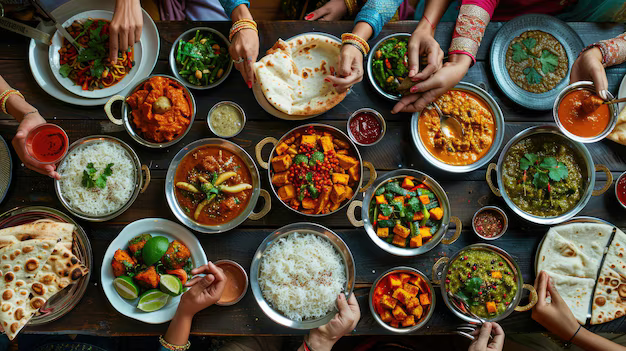
And then there’s the thali, my favorite way to experience Indian food. A thali is more than a meal—it is balance, abundance, and hospitality served together. Every flavor—sweet, sour, spicy, tangy—joins to create poetry on a plate. It’s comforting, complete, and deeply rooted in the Indian philosophy of harmony. Whether it’s the banana-leaf sadya of Kerala, the royal Rajasthani platter, or the comforting Gujarati thali, it feels like being invited into someone’s home and being served love in the form of food.
Indian cuisine, in all its forms, is a celebration of people, of history, of culture, and of love. It is more than what we taste; it is what we feel, what we remember, and what we carry with us long after the last bite.
Cultural Essence
In India, food has always been more than just a means of survival, it is a way of life, deeply tied to culture, emotions, and spirituality. Every meal carries a sense of ritual and meaning. The first portion of food is often offered to God or to nature, a gesture of gratitude that acknowledges food as a divine blessing rather than mere consumption.
Eating, too, is traditionally a shared experience, where families gather around a common plate and guests are served before the hosts, reflecting the belief that hospitality is sacred and feeding others is an act of love. Even the practice of eating with the hands is not just a custom, but a philosophy, the fingers symbolize the five elements, and the touch creates a mindful connection between body and food. In many homes, the person cooking ensures everyone else eats first, embodying the selfless nature of care.
Food in India is therefore an extension of emotion and devotion, it carries the warmth of a mother’s love, the reverence of ritual, and the togetherness of community.
Regional Identity
India’s regional cuisine is as diverse as its landscapes, with every state offering flavors shaped by its geography, climate, and traditions. Each region of India is like a country of its own, with flavors shaped by geography, climate, and history.
In the North, wheat dominates, giving rise to hearty breads like naan and paratha, paired with creamy gravies, lentil stews, and rich dairy-based dishes that bring warmth and comfort.
The South thrives on rice, lentils, tamarind, and coconut, creating tangy, spicy, and aromatic flavors seen in dosas, sambar, and Chettinad curries.
The East highlights subtle yet distinct tastes with fish, rice, and mustard oil, while Bengal and Odisha are equally celebrated for their sweets like rosogolla and chhena-based delicacies.
The West offers a remarkable variety—from Goan seafood curries touched by Portuguese influence to Gujarat’s vegetarian fare of dhokla, thepla, and undhiyu, along with Rajasthan’s bold laal maas and dal baati churma. Together, these regions form a vibrant culinary map where food becomes an expression of culture, history, and identity.
Traditional Wisdom
Indian cuisine carries within it the wisdom of Ayurveda, where food is not only nourishment but a way to maintain balance in body and mind. Meals are thoughtfully prepared to harmonize opposing forces, heat with coolness, energy with calmness, indulgence with cleansing. Every spice has a purpose beyond flavor: turmeric heals, cumin aids digestion, fennel cools the body, and ginger brings warmth. This ancient knowledge ensures that food strengthens immunity and aligns with natural rhythms. At its core, Indian tradition views food as prasad, a divine gift meant to be respected and shared, not just fuel for survival. Eating, therefore, becomes an act of wellness, gratitude, and spiritual connection.
Festive Foods
In India, festivals are not just marked on calendars—they are lived through flavors, aromas, and the joy of sharing food. Every celebration has its own signature dish, turning the dining table into a canvas of culture.
On Diwali, the festival of lights, laddus, gujiya, and barfi add their sweetness, sparkling as brightly as the diyas that adorn every home. Each bite is more than flavor; it carries the warmth of family, the joy of togetherness, and the timeless glow of tradition.
On Eid, homes overflow with the scent of biryani, the crackle of kebabs, and bowls of sheer khurma, flavors that whisper of love and togetherness.
Baisakhi, the Punjabi harvest festival, is marked with makki di roti, sarson da saag, lassi, and festive kheer—foods that honor abundance and the farmer’s toil. Lohri, another Punjabi favorite, is celebrated in winter with til laddus, revdi, peanuts, and popcorn, shared around the bonfire as families sing and dance.
Pongal and Makar Sankranti fill kitchens with til laddus, pongal, and sugarcane—flavors that echo thankfulness to the land and its bounty.
Onam’s majestic Sadya, with more than 20 dishes on a banana leaf, celebrates abundance, while Holi bursts alive with gujiya and flavors as radiant as the colors in the air, malpua, and thandai, turning joy into something edible. Every festival in India transforms food into memory, into story, into love on a plate. It is in these festive flavors that we find not just celebration, but identity, reminders that food is the heartbeat of tradition and the soul of togetherness.
Historical Influences
Indian cuisine is also a product of history, shaped by waves of cultural exchange and conquest. The Mughals left behind their legacy of biryanis, kebabs, kormas, and dishes enriched with dry fruits, saffron, and cream. From the Portuguese came staples like potatoes, tomatoes, chilies, and Goan vindaloo.
The British era added its mark with tea, puddings, cutlets, and the bakery culture still thriving today. Persian and Central Asian influences introduced pilafs, rich sweets, and delicate bread-making traditions. Each invader, trader, and traveler left behind not just goods but flavors, turning India into a culinary crossroads. The result is a cuisine layered with heritage yet uniquely its own.
Seasonal Philosophy
Indian food has always followed the rhythm of the seasons, in harmony with both climate and body needs. Rooted in nature, Indian food flows with the rhythm of the seasons, nourishing both climate and body in perfect harmony.
Summer brings cooling foods—curd, buttermilk, raw mango drinks, cucumbers, and melons that refresh and prevent heat imbalance.
In the monsoon, comfort food takes over, pakoras sizzling in hot oil, steaming khichdi, and spiced teas that bring warmth against the rain.
Winter transforms kitchens with hearty, energy-rich fare: ghee-laden sweets, sarson da saag, bajra roti, and hot soups, all designed to build strength against the cold. This seasonal rotation of ingredients and dishes reflects ancient wisdom, food is not static but responsive, adapting to nature’s cycles while nurturing balance within us.
On bustling streets, where chaat carts sing,
Pani puri sparkles, a tangy spring.
Samosa’s crunch, pav bhaji’s flair,
Every corner whispers, “Taste me if you dare.”
From coasts to deserts, the flavors roam,
Fish in the East, in the North—bread’s home.
South stirs coconut, tamarind’s grace,
The West blends spice with a sunlit embrace.
A thali arrives, like poetry on a plate,
Sweet, sour, and spicy in perfect fate.
Hospitality flows, abundance divine,
Food in India is a cultural sign.
More than a meal, it’s love, it’s art
A thousand regions, one beating heart.